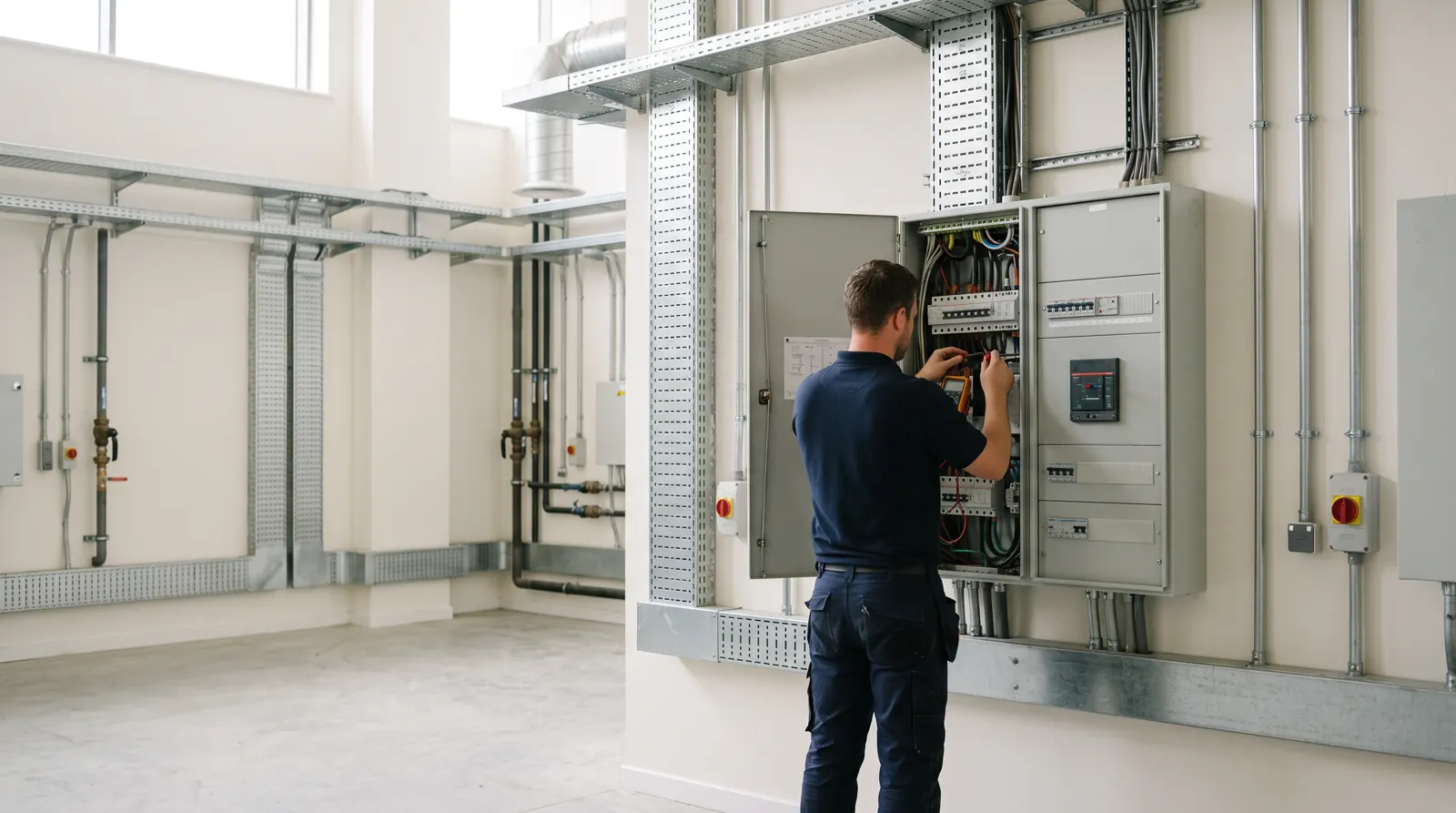

What we do and who it is for
Three-phase power installation, alterations, fault diagnosis and compliance work from fixed-price quotes. Based in Canterbury and covering surrounding towns and developments across the borough. Work is guaranteed to meet BS 7671 with electrical installation certificates, schedules and test results issued.
Around Canterbury the housing we see most is Georgian brick houses near the cathedral precincts, Victorian terraces in Wincheap and St Dunstan's, large student rental stock, new estates at the edges. That shapes the work we are called to: student and rental HMO compliance, listed and period property in the precincts, commercial work for the city centre. Every job is priced in writing before we start, and the same NICEIC standards apply whether the property is a period terrace or a new-build flat.
Typical jobs
When working in Canterbury we also consider building fabric, access routes and whether work affects shared areas or sensitive period features typical of the town — for example, conserved façades and sash windows in parts of the Town Centre and older cottages in Rough Common.
What it costs
Three-phase installations and maintenance are quoted after a free site survey so we can confirm supply, isolation and any distribution or testing requirements before issuing a fixed written price. Below are standard job rates; final quotes state included work and VAT.
| Job | Price | What's included |
|---|---|---|
| Labour (per hour) | £80 | Site labour, testing and certification as specified in the written quote (VAT included) |
| Day rate | £600 | Full-day site labour, testing and certification as specified in the written quote (VAT included) |
| Emergency attendance (per hour, first hour minimum) | £120 | Emergency call-out labour and initial assessment, testing and certification as specified in the written quote (VAT included) |
Not included: DNO supply-upgrade charges, asbestos removal, scaffold/access equipment, plaster repairs and decoration.
How the work is planned
We begin with a free site survey to verify the incoming supply, DNO equipment, existing distribution, load requirements and safe isolation arrangements. We identify whether the proposed three-phase capacity requires DNO alterations, assess cable routes, containment, earthing and the position of new distribution equipment. We also confirm Site access, working hours, delivery restrictions and any requirements affecting occupied premises.
We then prepare a sequenced programme that separates DNO works, installation activities and final connections. Phased scheduling helps us maintain essential services where practicable, particularly for businesses, shared buildings and properties with critical equipment. Before attendance, we agree isolation windows, access responsibilities, temporary power needs and reinstatement requirements. Our fixed written quotation defines the agreed scope, enabling you to plan expenditure and operations before work starts.
Compliance and documentation
Compliance work will include checking that the proposed three‑phase installation is designed and carried out with regard to BS 7671, the Electricity at Work Regulations 1989 and any applicable DNO requirements; we will confirm supply arrangements, protective measures, earthing, isolation, labelling and test provisions before energisation. Our risk assessments will identify hazards associated with the installation, connected equipment and foreseeable maintenance activities.
On completion we will issue an appropriate Electrical Installation Certificate (or other relevant certification), provide schedules of inspection and test results, circuit information and any DNO correspondence relating to the altered supply; these documents record the inspections and tests carried out against the applicable standard but are not in themselves a guarantee of continued compliance.
The Electricity at Work Regulations require that electrical systems are maintained so as to prevent danger. Commercial EICR intervals are not fixed by law (the commonly quoted office/industrial/annual periods are guidance rather than statutory requirements); we recommend inspection frequencies based on risk, insurer requirements and client needs, and can advise on record retention and review dates.
Minimal disruption and out-of-hours working
To limit disruption, we’ll plan three-phase work around your operating hours, isolating only the circuits and equipment necessary for each stage where the installation permits. Our site surveys establish access arrangements, supply characteristics, distribution routes, shutdown dependencies and safe segregation requirements before works are scheduled.
We’ll provide a written programme identifying proposed isolations, testing periods and reinstatement checks. Where continuity is essential, we can arrange work out of hours, subject to safe access, agreed permits and the availability of the distribution network operator where required. We’ll sequence containment, cabling, terminations and testing to reduce downtime, maintaining clear exclusion zones and housekeeping controls. Before energisation, we’ll complete inspection, testing and functional checks, then confirm that affected equipment is safely returned to service. Any changes to the agreed scope or shutdown plan will be documented and approved before proceeding.
Premises and sites around Canterbury
This lets us determine, for a specific Canterbury address, whether a new circuit, a distribution board upgrade or an application for additional supply capacity to UK Power Networks is required.
We design and carry out work for each Canterbury property in accordance with BS 7671, record the site-specific inspection and test results, and provide the appropriate electrical installation certificate and landlord/occupier copies on completion.