What this job involves and what it costs
Electric heating installation and upgrades from single radiators to whole-home systems, priced from £80/hr or £600/day (fixed written quotes provided). Serving Canterbury and surrounding areas including Victorian terraces and post‑war homes. All work is fully certified and guaranteed; we assess wiring, earthing and consumer units before installation.
When you need it
- The room stays cold even when the heating is on.
-
This usually means the existing system or pipework can’t get enough heat to that space.
-
Replacing the boiler feels too expensive or disruptive.
-
This usually means another heating option (like electric) may be more practical.
-
You’re using a loft, garden room or new extension and it never warms up.
-
This usually means the space isn’t connected to or served well by your central-heating system.
-
One bedroom is always cold while the rest of the house is fine.
-
This usually means you need an independent, controllable heater for that room.
-
You don’t want to extend pipework into a garden room or outbuilding.
-
This usually means an electric heater will be easier to install than new radiators and pipes.
-
You live in an older house where you can’t or don’t want big alterations.
-
This usually means you need a discreet, low-impact heating solution.
-
You keep heating rooms you don’t use and your bills are high.
-
This usually means zoning or individual thermostats could stop you wasting energy.
-
The central heating takes a long time to warm the house on very cold days.
-
This usually means an electric heater can act as quick backup heat during cold snaps.
-
You’re worried the new heater might overload sockets or trip breakers.
-
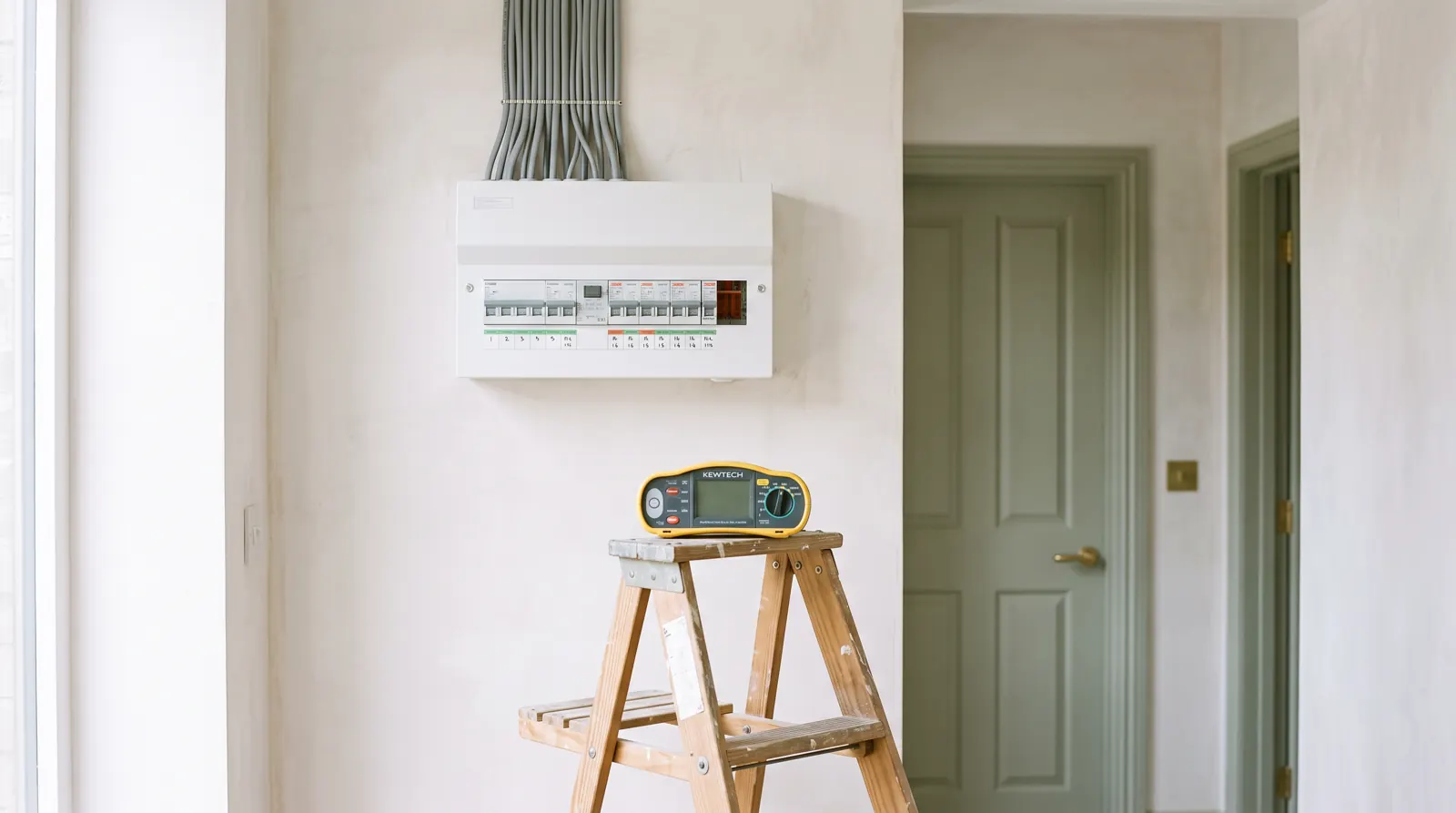
This usually means the consumer unit or wiring may need checking and possibly a dedicated circuit.
-
In an old Victorian terrace you’re unsure about the wiring condition.
- This usually means there may be outdated cable types that need inspection before new equipment is fitted.
What it costs in Canterbury
Costs for electric-heating work in Canterbury vary by heater type, circuit capacity and the condition of existing wiring — we’ll survey loading, protective devices and any required panelboard upgrades before pricing. Infrared panels and fixed heaters are quoted per job after a free survey.
| Job | Price | What's included |
|---|---|---|
| Fault finding | £80/hr | Labour, testing, VAT |
| Consumer unit replacement | £500–£700 | Parts, labour, certificate, VAT |
| Partial rewire | £1,200–£3,000 | Parts, labour, testing, certificate, VAT |
Not included: plaster repairs, decoration, asbestos removal, DNO supply-upgrade charges, scaffold or specialist access equipment.
What is involved on the day
On the day, we’ll survey the proposed heater positions, confirm cable routes and safely isolate the relevant circuits. We’ll install and connect the heating equipment, then test the circuit and protective devices before restoring supply. Once the work meets the required checks, we’ll issue the appropriate electrical certificate.
Survey and isolation
Before any electric heating work begins, we’ll survey the room, confirm the heater position and assess the existing circuit, consumer unit capacity, cable condition and earthing arrangements. Our survey checklist also considers wall construction, suitable cable routes, clearances from furnishings, and whether the proposed heater load requires a dedicated circuit or protective device upgrade.
We’ll explain any limitations found, particularly in older Canterbury homes with VIR, rubber or aluminium wiring. Before testing or accessing electrical connections, we follow a safe isolation procedure: identify the correct circuit, isolate it at the consumer unit, secure it against reconnection, prove the tester, verify the circuit is dead, then re-prove the tester. We’ll keep you informed about which areas need temporary power interruption and protect nearby finishes before any electrical work proceeds.
Installation
Once the circuit is safely isolated, we’ll mount the electric heater in the agreed position, run and secure the correct cable route, and make the final connections in line with the manufacturer’s instructions and BS 7671. We’ll use suitable fixings for the wall construction, checking for concealed services before drilling. Where a dedicated circuit is required, we’ll route cable neatly through accessible voids or surface containment, minimising disruption to finishes.
We’ll fit smart thermostats where specified, positioning sensors away from draughts, direct sunlight and heat sources so they can regulate accurately. If your plans include renewable integration, we’ll make certain the heater controls and supply arrangement are compatible with the proposed system. We’ll keep you updated if site conditions require a practical alteration to the agreed cable route or fixing method.
Testing
After installation, we’ll test the heater circuit, protective devices and controls to confirm they operate safely and as intended. We carry out continuity testing to verify that conductors and protective connections are complete, then check insulation resistance to identify damage or unwanted leakage.
We’ll confirm correct polarity at connection points and test the circuit’s disconnection performance at the consumer unit. Where an RCD protects the circuit, we test its operation and trip time. We also run each heater, checking thermostats, timers, programmers and any smart controls respond properly.
Our safety inspections include checking secure terminations, cable protection, suitable clearances and accessible isolation. If we find an issue, we’ll explain it plainly, correct it where agreed, and retest before leaving. This helps make certain your new electric heating is ready for normal use safely.
Certificate
Provided the installation and testing meet the relevant requirements, we’ll issue the appropriate electrical certificate on the day. For a new fixed electric-heating circuit, this is normally an Electrical Installation Certificate; for smaller additions or alterations, it may be a Minor Electrical Installation Works Certificate. The document records the work completed, circuit details, protective devices, test results and confirmation that the installation complies with applicable standards.
We’ll explain what the certificate covers and give you a copy for your records. It is not simply a safety certificate: it provides evidence that the work has passed our compliance check at completion. Where Part P notification applies, we’ll handle the required notification process. Keep the certificate with property documents, particularly if you later sell, let or alter the electrical installation.
Options and what we recommend
For most Canterbury homes, we recommend electric heating only where it suits the room, insulation level and available electrical capacity—not as a like-for-like replacement for a whole-house gas system without a proper assessment.
| Option | What it can feel like |
|---|---|
| Panel heater | Quick comfort in a spare room |
| Storage heater | Steady warmth with tariff planning |
| Underfloor heating | Calm, even heat underfoot |
We’ll usually suggest panel heaters for occasional rooms, smart thermostats for controllable schedules, and underfloor heating in small refurbished bathrooms or kitchens. We calculate circuit loading, heater outputs and running pattern before recommending anything. Older Wincheap terraces and post-war properties may need capacity checks first, particularly where wiring is ageing. If your aim is lower bills, better insulation and controls often matter as much as the heater choice. We’ll explain the trade-offs plainly.
Rules and certificates
Electric heating work should comply with the current IET Wiring Regulations (BS 7671) and, where applicable, Part P of the Building Regulations. We assess whether proposed heaters require a new circuit, alterations to an existing circuit, or consumer unit work before providing a price.
Under the Building Regulations, some types of electrical work—for example new circuits, consumer‑unit replacements and certain work in bathrooms or other special locations—are notifiable. As an NICEIC‑registered competent person, we may self‑certify eligible work and notify Building Control on your behalf; however, not all electrical work is eligible for self‑certification and some work may still require a Building Control application or inspection.
You will receive appropriate paperwork for the work carried out: an Electrical Installation Certificate (EIC) for a new circuit or consumer unit replacement, or a Minor Electrical Installation Works Certificate for additions to an existing circuit where applicable. If we undertake an inspection that requires it, we will issue an Electrical Installation Condition Report (EICR).
Older homes around Canterbury
In central Canterbury and the Wincheap area we always carry out a full circuit check before we specify any electric heating.
Instead we advise, for each Canterbury or Wincheap property, whether dedicated circuits, consumer‑unit upgrades or wiring improvements are needed before installation.
In Canterbury and Harbledown, Rough Common and Wincheap we work across Georgian brick houses near the cathedral precincts, Victorian terraces in Wincheap and St Dunstan's, large student rental stock, new estates at the edges. The recurring themes are student and rental HMO compliance, listed and period property in the precincts, commercial work for the city centre; we explain what we find in plain English and put a fixed price in writing before any work begins.
How long it takes and whether you lose power
Most electric-heating installations in Canterbury can be completed in a day, provided the existing consumer unit, circuits and cable routes are suitable. We’ll confirm this before work starts, then isolate only the circuits we need where possible. You may have short power interruptions while we connect new supplies, alter protective devices or carry out testing; we’ll tell you when these are due so you can protect computers, routers and refrigerated items.
Larger upgrades, including a consumer unit replacement, additional circuits or concealed cable routes, can extend into a second day. We test insulation resistance, polarity, earthing and protective-device operation before energising the installation and issue the appropriate certification.
Electric heating does not provide power during a network outage. For Grid resilience, we can assess whether Backup batteries are appropriate, but their capacity and supply arrangements must be designed separately.