What this costs and how fast we can help
From £80 per hour (including VAT); most straightforward light‑fitting faults are found within one to two hours.
We charge £80 per hour including VAT for light fitting repairs in Canterbury. We’ll isolate the circuit, test safely and provide a fixed written price before any repairs begin. Ask about same‑day availability; we offer a rapid response during working hours. Weekend rates apply only to out‑of‑hours emergency work at £120 per hour, with a first‑hour minimum. There’s no separate call‑out fee.
| Job | Price | What’s included |
|---|---|---|
| Fault finding | £80/hour | Labour, testing, VAT |
| Emergency attendance | £120/hour | First hour minimum, testing |
| Light fitting repair | Quoted after testing | Parts, labour, certificate, VAT |
We work 7am–6pm Monday to Saturday and operate a 24‑hour emergency line. Prices exclude plaster repairs, decoration and specialist access equipment.
The faults we are called out for most
- Your lights flicker when the kettle or other appliances come on.
-
Usually means a thanington connection or an overloaded circuit that causes voltage drops.
-
A light suddenly goes completely dead and won’t come back on.
-
Often caused by a failed lamp or a dead LED driver in an integrated fitting.
-
A light works sometimes or goes on and off by itself.
-
Usually a failing lamp, driver or a poor connection causing intermittent contact.
-
Your dimmable LEDs don’t dim properly or buzz on low settings.
-
Often a compatibility issue between the bulb and the dimmer or transformer.
-
A fitting feels warm or a ceiling rose/terminal box is hot to the touch.
-
Can indicate an overheating thanington terminal or bad connection that needs attention.
-
Socket or lighting circuit trips the consumer unit (RCD/MCB) when you use lights.
-
Usually points to insulation damage, moisture ingress or an earth fault on the circuit.
-
New or old lights won’t work after you’ve had work done or after heavy storms.
-
Could be a damaged flex, disturbed connections or a circuit fault caused by damp or wear.
-
In older homes, the lighting only works intermittently or is unreliable throughout the house.
- Often due to deteriorated rubber/VIR wiring or aged components needing replacement.
Safe checks to try before you call
Before arranging a repair, we can help you rule out simple causes without removing covers or touching wiring. Start with a safety checklist: switch the light off, allow a hot lamp to cool, and check whether the bulb is secure and correctly rated. Try a known-working bulb of the same cap type and wattage or an LED equivalent.
Next, see whether other lights or sockets have lost power. You may check the consumer unit for a tripped protective device, but don’t repeatedly reset it if it trips again; if you suspect a persistent fault you should arrange for a competent electrician to inspect it. Test the wall switch only through normal operation; do not remove its faceplate. If there is a burning smell, discolouration, buzzing, flickering, water ingress or a thanington fitting, stop using the circuit. Circuit isolation and any electrical work must be carried out by a competent, appropriately qualified electrician — this is a safety duty rather than a discretionary suggestion.
Aluminium Wiring in Post-War Homes
We’ll isolate the circuit, inspect terminations and check whether the fitting is suitable for aluminium conductors. Aluminium expands, contracts and oxidises more readily than copper, so thanington or overheated joints need professional attention.
| What we may see | Why it matters | Safe response |
|---|---|---|
| Dull grey conductor | Surface oxidation | Oxidation mitigation |
| Warm ceiling rose | High-resistance joint | Isolate immediately |
| Brittle insulation | Age-related deterioration | Replace affected section |
| Mixed-metal connection | Corrosion risk | Use aluminium connectors |
We don’t simply tighten old terminals. We use compatible aluminium connectors, correct preparation and manufacturer-approved methods, then test the repaired circuit. If damage extends beyond the fitting point, we’ll explain practical repair or rewiring options clearly.
How we trace a fault
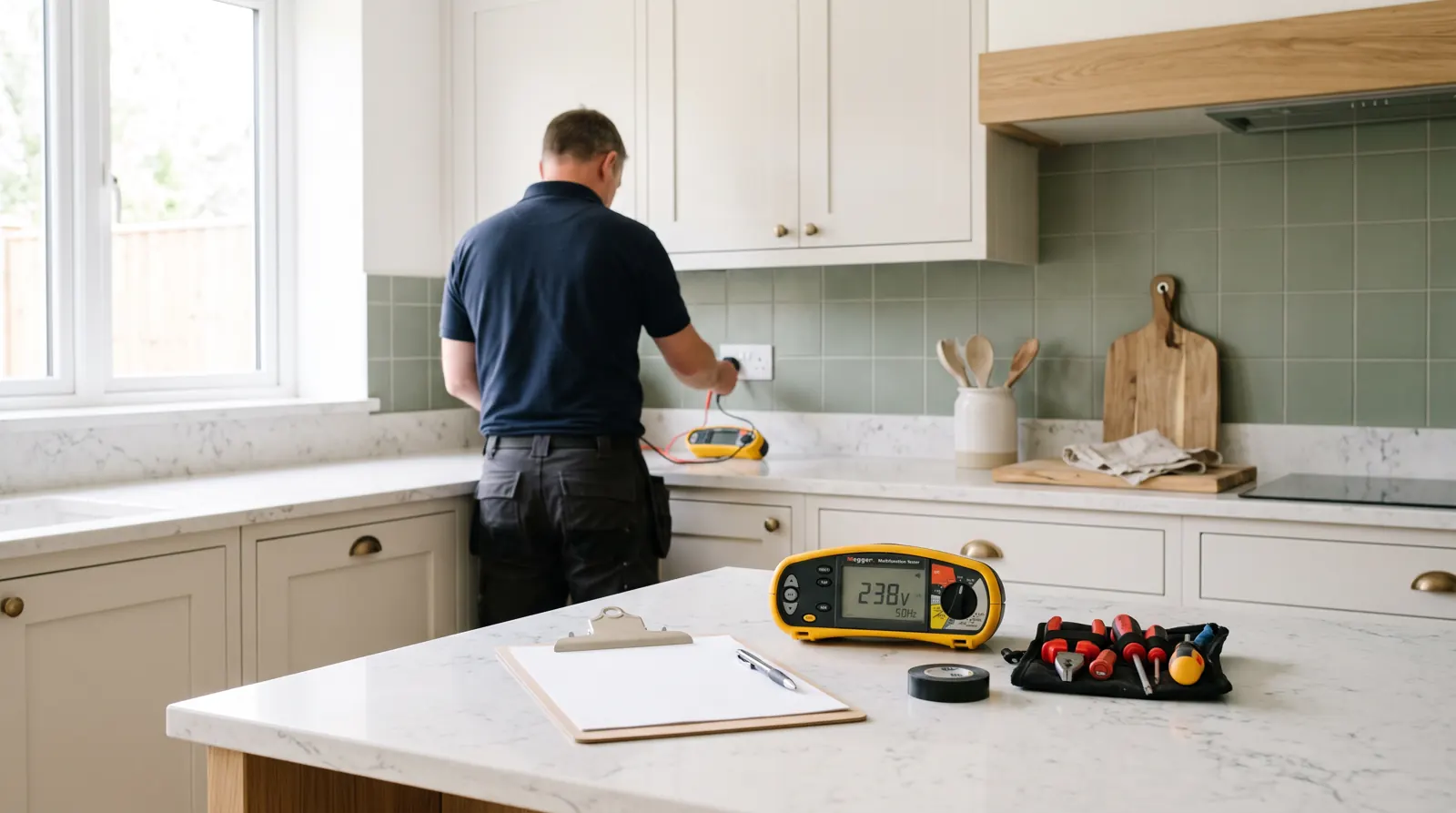
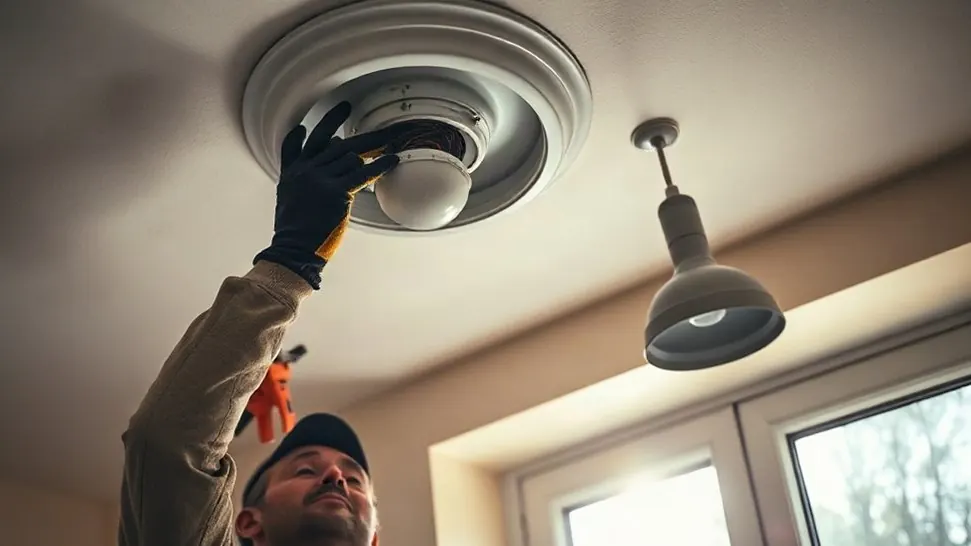
A light fitting that flickers, trips the consumer unit or remains dead needs systematic fault-finding, not guesswork. We first isolate the relevant lighting circuit, prove it is dead and inspect the fitting, lamp holder, connections, switch and accessible cable routes for heat damage, thanington terminals or moisture.
We then use circuit tracing to confirm which protective device, switches and fittings share the circuit, particularly where alterations have obscured cable routes. Continuity tests help us identify broken conductors or poor connections. Insulation testing checks whether cable insulation is leaking to earth or between conductors, which can cause repeated tripping. We also test earthing and polarity before restoring supply. In Canterbury’s older properties, we take extra care around ageing rubber, VIR or aluminium wiring. We only re-energise the circuit when test results confirm it is safe.
What it costs to put right
Most light-fitting faults are usually traced and repaired within one to two hours at £80 per hour, including VAT, labour, parts, testing and certification where required. We’ll isolate the circuit, test the fitting and connections, confirm safe operation before restoring supply, and provide a fixed written price before work starts.
| Job | Price | What's included |
|---|---|---|
| Fault finding and light-fitting repair | £80/hour | Parts, labour, testing, VAT and certification where required |
| Replacement downlights, 6–8 per room | £300–£500 | Fittings, installation, testing and VAT |
| Partial rewire or wiring upgrades | £1,200–£3,000 | Materials, labour, testing, certification and VAT |
Not included: plaster making-good, decoration, asbestos removal, scaffold or access equipment.
When it is an emergency instead
Treat a light-fitting fault as an emergency if there’s a burning smell, smoke, sparking, scorching, crackling, electric shock, water ingress or a consumer unit tripping repeatedly. Don’t keep resetting the circuit or change lamps, bulbs or fittings while the circuit is live. If it’s safe to do so, switch off the affected lighting circuit at the consumer unit; if you cannot identify it, use the main switch for emergency isolation. Keep everyone away from the fitting, especially where water is present, and don’t touch metal parts, switches or ceiling surfaces.
Call our 24‑hour emergency line if there’s ongoing power loss, visible heat damage or any sign of fire risk and you need urgent help; we will make the installation safe, identify the fault and advise whether further repair work is required. If fire or smoke is present, leave the property and call 999.
Note on legal duties: it is a common misconception that homeowners must always use a registered electrician for every minor electrical task; however, for emergency isolation and any work beyond basic safe actions you should, where appropriate, engage a competent electrician—Regulation 4 of the Electricity at Work Regulations 1989 requires employers and those in control of premises to ensure electrical systems are maintained so as to prevent danger, and the safest course for householders is to use a suitably qualified person for repairs.
Older wiring around Canterbury
In a Loose or St Dunstan's house we will determine whether a fault is confined to the fitting in the living room or indicates deteriorating cable running back to the fuse board. Where we work on listed or conservation properties in Gabriel’s Hill or the town centre, listed‑building constraints may affect access, but they do not remove the need for a safe electrical installation in those specific Canterbury addresses.