What we do and who it is for
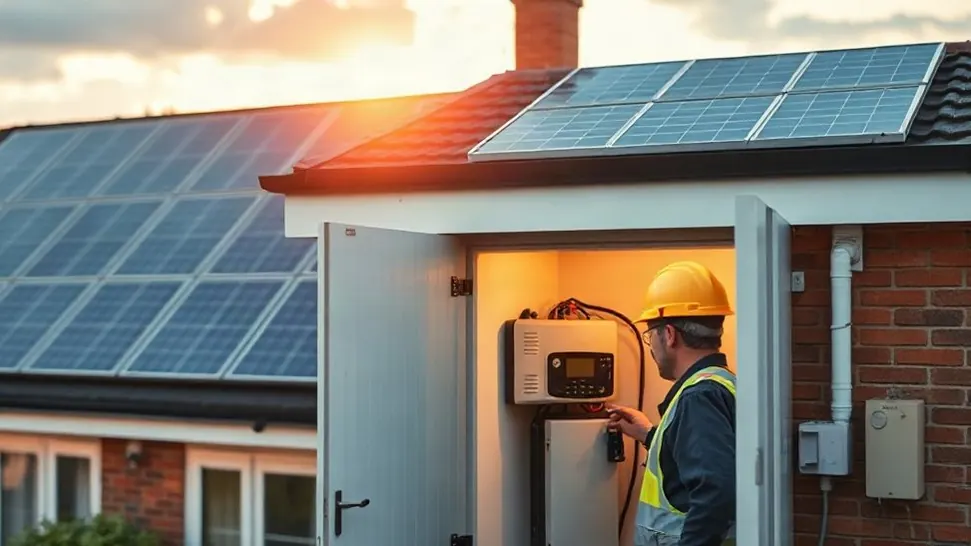
Home battery system design and installation from £X — tailored capacity and inverters to store solar, cut peak grid use or keep essential circuits running. Canterbury, covering Wincheap, central Canterbury and surrounding post‑war suburbs. Guaranteed workmanship with written quotation and full electrical certification.
In Canterbury and Harbledown, Rough Common and Wincheap we work across Georgian brick houses near the cathedral precincts, Victorian terraces in Wincheap and St Dunstan's, large student rental stock, new estates at the edges. The recurring themes are student and rental HMO compliance, listed and period property in the precincts, commercial work for the city centre; we explain what we find in plain English and put a fixed price in writing before any work begins.
Typical jobs
- Retrofitting a compatible battery alongside existing solar PV on common 1980s bungalows in Westborough
System sizing matters for Canterbury properties: an oversized battery on a small 1930s semi in Thanington may not cycle fully, while insufficient capacity in a large 1950s detached in St Dunstan's limits usable savings.
What it costs
Home battery storage quotes are provided per job after a free survey, since costs depend on battery capacity, inverter compatibility, consumer unit condition, cable routes and whether you’re adding to existing solar PV or installing a standalone system. We’ll provide a fixed written price before work starts, including VAT, parts, labour, testing and certification.
| Job | Price | What's included |
|---|---|---|
| Battery installation | Quoted per job | Parts, labour, testing, certificate, VAT |
| Consumer unit replacement | £500–£700 | Parts, labour, testing, certificate, VAT |
| Fault finding | £80/hr | Diagnosis; most faults take 1–2 hours |
Prices exclude plaster repairs, decoration, asbestos removal, scaffold and access equipment.
How the work is planned
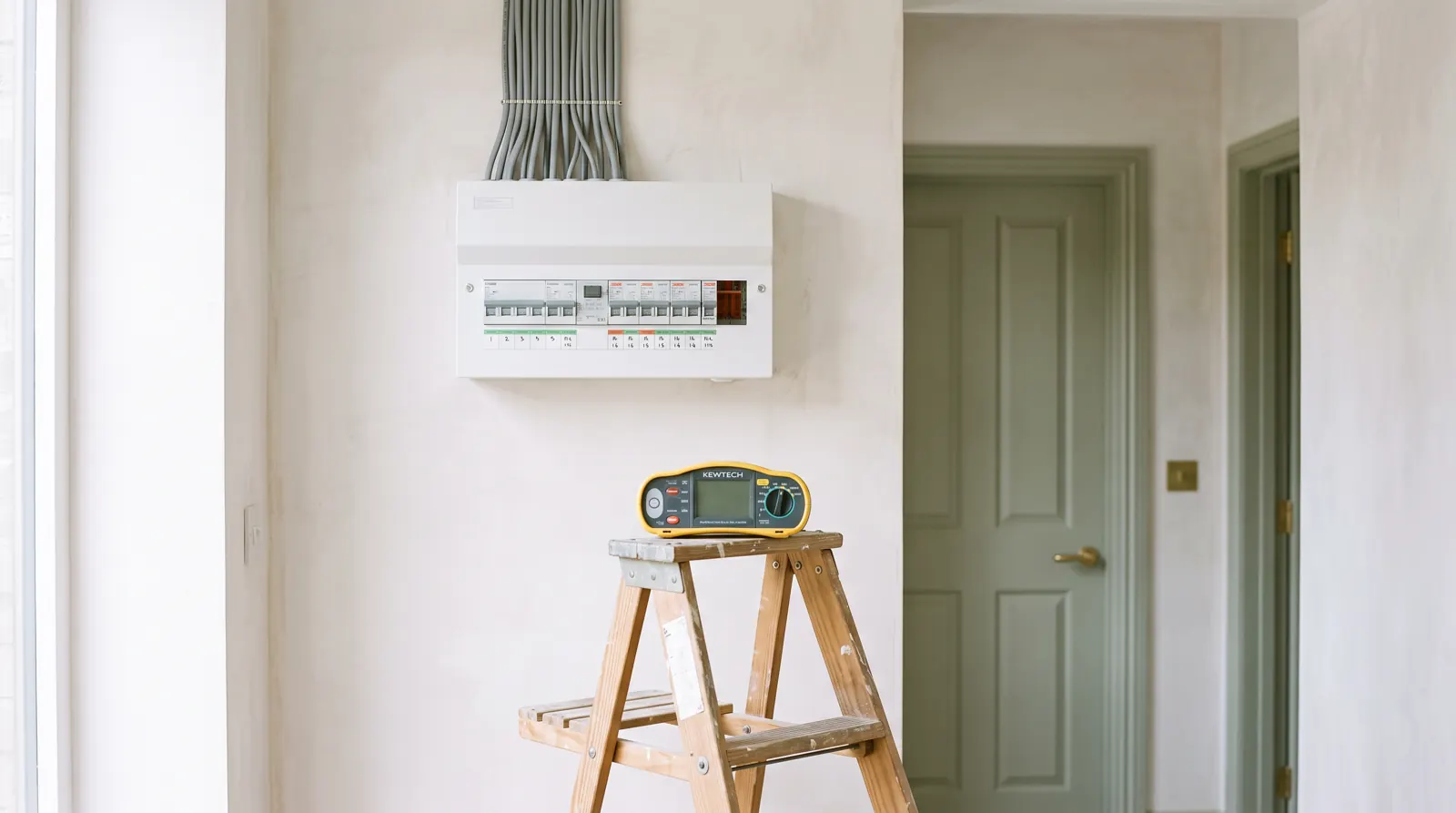
Before specifying a system, we carry out a free survey to assess your electricity use, existing solar PV and inverter, consumer unit capacity, earthing arrangement, battery location, cable route and network requirements. Our site survey also considers shading, available wall or floor space, ventilation, access for installation and whether your supply arrangement affects the proposed output.
We use half-hourly consumption data where available, alongside your bills and generation figures, to size usable storage rather than simply selecting the largest battery. We’ll explain expected charging behaviour, backup options and any limits imposed by your inverter or supply.
Once the design is agreed, we confirm a fixed written price and project timeline. We plan isolation periods, equipment delivery and cable routes before arrival, aiming to minimise disruption to your household and existing solar generation.
Compliance and documentation
Battery storage installations in Canterbury should be carried out in accordance with Part P of the Building Regulations where applicable, BS 7671 and any applicable requirements of the relevant network operator; we assess the proposed connection, protective devices, earthing arrangement and export settings before commissioning and, where notification or formal approval is required, we manage liaison with the distribution network operator and provide the necessary technical information.
On completion you should receive electrical certification, test results, manufacturer documentation, commissioning records and any relevant network correspondence; these documents record that the installation was inspected and tested and will support warranty claims, future alterations and property records retention.
Contrary to a common belief, fixed-wire inspection intervals for commercial premises are not prescribed by law; IET Guidance Note 3 recommends inspection frequencies, while the Electricity at Work Regulations 1989 impose a duty to maintain electrical systems so as to prevent danger. Insurers, landlords or licensing bodies may require a current report.
Minimal disruption and out-of-hours working
Most Canterbury home battery installations can be planned to keep disruption contained to the consumer unit, battery location and cable route. We’ll survey access, wall construction, existing circuits and metering arrangements before fixing the installation date. This lets us identify where drilling, trunking or lifting floorboards may be necessary and protect finished surfaces.
We normally isolate supplies only for the connection and testing stages, rather than for the whole visit. Noise control means scheduling drilling and cable-routing work at suitable times, using contained dust extraction where practical, and keeping routes as direct as safety permits. If you need work outside normal occupancy, ask us about After hours access arrangements. We’ll confirm attendance, isolation requirements and any additional labour cost in writing. Batteries must remain accessible for inspection, ventilation and future servicing, so concealed locations aren’t always appropriate.
Premises and sites around Canterbury
Across Canterbury we assess each property’s electrical capacity, meter position, cable route and proposed battery location before specifying a system.
In Canterbury and Harbledown, Rough Common and Wincheap we work across Georgian brick houses near the cathedral precincts, Victorian terraces in Wincheap and St Dunstan's, large student rental stock, new estates at the edges. The recurring themes are student and rental HMO compliance, listed and period property in the precincts, commercial work for the city centre; we explain what we find in plain English and put a fixed price in writing before any work begins.