
What we do and who it is for
Fixed and standby generator installation from a written, fixed-price quote. Serving Canterbury CT1, including Harbledown, Rough Common, Wincheap, St Dunstan's and Thanington. NICEIC approved and Part P registered, with BS 7671 and Building Regulations compliance guaranteed.
Around Canterbury the housing we see most is Georgian brick houses near the cathedral precincts, Victorian terraces in Wincheap and St Dunstan's, large student rental stock, new estates at the edges. That shapes the work we are called to: student and rental HMO compliance, listed and period property in the precincts, commercial work for the city centre. Every job is priced in writing before we start, and the same NICEIC standards apply whether the property is a period terrace or a new-build flat.
Typical jobs
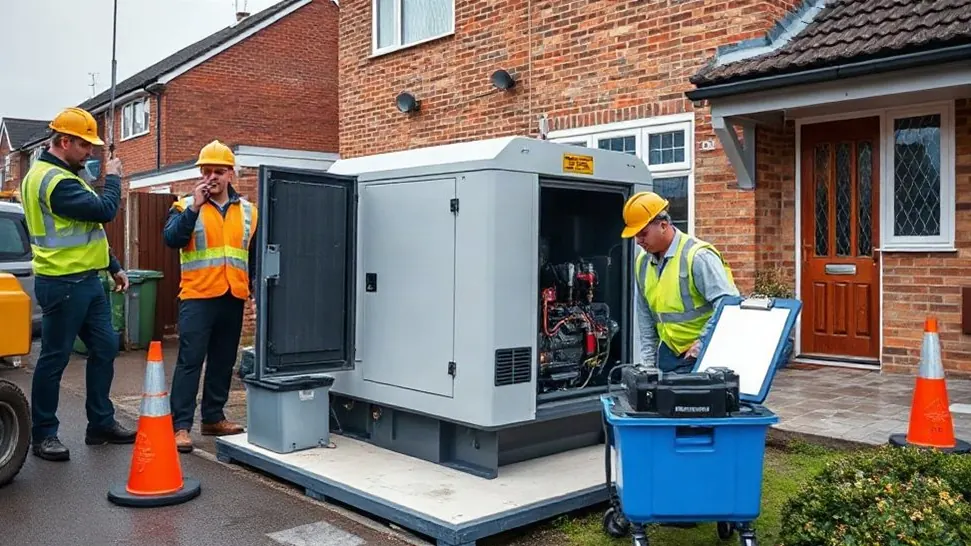
For semi-detached Victorian and interwar terraces in Boyn Hill and Furze Platt we install standby systems with automatic transfer switches so households have automatic backup during the short but frequent Thames Valley power cuts. In the industrial estates near Bray and Furze Platt we design interlocked changeovers to prevent back-feeding to the local grid and to protect adjacent properties, many of which are late-20th-century light-industrial units.
We advise residents in terraced streets and flats that portable generators must never run indoors, in garages or near openings because exhaust fumes create a carbon-monoxide risk particular to the close-built housing found in central Maidenhead. We also test changeover operation on site so a supplied property in Maidenhead cannot energise network lines during an outage.
What it costs
Generator installation costs in Canterbury are quoted per job after a free survey because price depends on generator type, essential-load capacity, changeover arrangement, cable route, earthing and ventilation requirements. We provide a fixed written price before work starts, including VAT, parts, labour, testing and certification.
| Job | Price | What's included |
|---|---|---|
| Generator installation | Quoted per job after a free survey | Fixed written price before work starts; VAT, parts, labour, testing and certification (specific scope confirmed after survey) |
| Labour | £80 per hour | Skilled installation and testing time |
| Day rate | £600 | Site work for a standard day (labour rate applies within) |
Not included: making good, asbestos removal, DNO supply-upgrade charges, scaffold or access equipment.
How the work is planned
Before we specify a generator installation, we survey the property to identify the essential circuits, generator location, cable route, changeover method, earthing arrangement, ventilation and any DNO requirements. Our site survey also checks access, noise exposure, fuel storage considerations, flood risk and the condition of the existing consumer unit and supply equipment.
We then use timeline mapping to sequence isolations, delivery access, groundwork, cabling and changeover installation with minimal disruption. Stakeholder coordination is important where landlords, managing agents, neighbours, facilities teams or network operators are involved. We plan phased delivery where continuity is critical, separating preparatory works from the final connection and controlled changeover. You’ll know which circuits are intended to remain live during an outage, how the generator will be operated safely, and when planned interruptions may be necessary.
Compliance and documentation
Once the installation plan is agreed, we document the compliance measures that support safe operation, testing and future maintenance. We provide clear certification, circuit information, test results and operating guidance for your generator changeover arrangement. We distinguish statutory duties from good-practice recommendations: the Electricity at Work Regulations 1989 require that employers and those in control of electrical systems take reasonable steps to prevent danger from electricity, but they do not prescribe specific inspection intervals.
Contrary to a common belief, there is no statutory five-year office, three-year industrial or annual inspection requirement for commercial premises; those intervals come from IET Guidance Note 3 as recommended practice, not law. However, insurers, landlords and licensing bodies may require a current report. Good record keeping helps demonstrate ongoing maintenance, supports fault investigation and gives future contractors accurate information about isolation points, earthing arrangements, protective devices and generator test procedures.
Minimal disruption and out-of-hours working
To minimise disruption, we plan generator installation around your operating hours, identifying essential circuits, safe isolation points and cable routes before work begins. We’ll agree a staged programme, isolate only the required distribution sections and maintain safe access throughout. Where continuity is critical, we can arrange temporary changeover procedures and test the generator, automatic transfer equipment and earthing arrangements before handover.
Out of hours work is available where it reduces downtime, with labour charged at our applicable out-of-hours rate. We’ll confirm the scope, access arrangements and fixed price in writing beforehand. For a Quiet installation, we schedule noisy drilling, lifting and load testing sensitively, while still meeting manufacturer requirements and electrical safety standards. We’ll leave the work area secure, label isolation points clearly and provide relevant certification after completion.
Premises and sites around Canterbury
For specific premises in these neighbourhoods we determine whether building systems such as fire alarms in Victorian and Edwardian properties, emergency lighting in converted warehouses, pump systems serving basement plant rooms or communications infrastructure need resilient supplies; we then design isolation arrangements, earthing and routine testing schedules in line with the applicable British standards and the particular installation constraints of each Canterbury site.