What this job involves and what it costs
Fire alarm testing to verify detection, occupant warning and linked safety functions — fixed written prices based on system size and any remedial work. Serving Tunbridge Wells and surrounding areas including Tonbridge, Paddock Wood, Crowborough and Sevenoaks. Work is carried out by certified engineers, fully insured, with a satisfaction guarantee and issued test reports and compliance certificates.
When you need it
- You notice your fire alarm keeps going off for no obvious reason.
-
This usually means something is triggering false alarms or there's a faulty detector that needs checking.
-
The alarm stopped working after someone made changes to the room layout or wiring.
-
This often indicates the system was disturbed during alterations or a connection was damaged.
-
The alarm behaves strangely after building work—dusty, intermittent or silent in places.
-
That usually points to detectors, cabling or sounders being blocked, disconnected or dirty from the works.
-
The alarm gives frequent warnings or shows fault lights.
-
That typically means a device is failing, batteries/backup power are low, or there’s a wiring fault.
-
The alarm didn’t sound or only sounded in part of the building during a test or real event.
-
This usually means some detection, warning or control components aren’t working correctly.
-
You’ve been away and on return the alarm won’t behave or shows errors.
-
That often follows periods of vacancy, water exposure, or interference that affected the system.
-
Your insurer or landlord asks for proof the alarm was tested and working.
-
This usually means documented checks are required to show the system meets safety duties and standards.
-
You’re unsure if the alarm will protect everyone because escape routes, occupancy or use have changed.
- That generally means the system needs reassessing and testing to confirm it still suits the building and people.
What it costs in Canterbury
Costs for fire alarm work in Canterbury are quoted per job after a free survey because the final price depends on system type, device numbers, access requirements and any faults found. We’ll confirm a fixed written price before work begins to help you budget.
| Job | Price | What's included |
|---|---|---|
| Fire alarm testing | Quoted per job after a free survey | Labour, testing, certification, VAT |
| Battery replacement | Quoted per job after a free survey | Suitable parts, labour, testing |
| Fault finding | £80/hr | Investigation; most faults traced in 1–2 hours |
| Emergency attendance | £120/hr (first hour minimum) | Emergency attendance |
Not included: scaffold or access equipment, asbestos removal, plaster repairs and decoration.
What is involved on the day
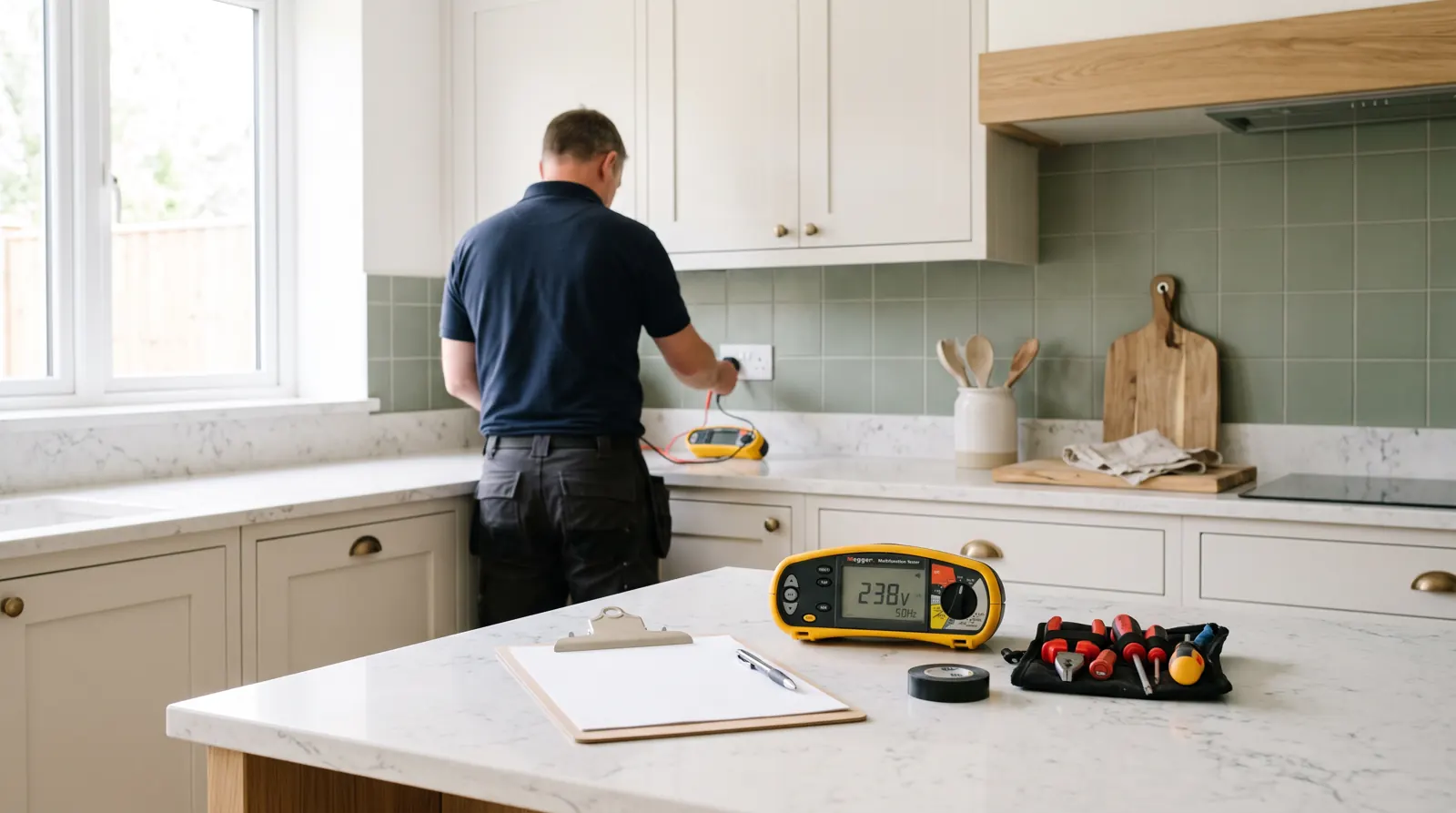
On the day, we survey your fire alarm system, agree safe isolation arrangements where required and identify any immediate risks. We then complete the necessary installation or remedial work before testing detectors, call points, sounders and control equipment in line with the system’s requirements. Once satisfactory, we record the results and issue the appropriate certificate or test documentation for your compliance records.
Survey and isolation
Before fire alarm testing begins, we’ll survey the premises to identify the control equipment, call points, detectors, sounders and any linked systems that could be affected. We’ll confirm the alarm zone layout, access requirements and whether interfaces operate shutters, lifts, ventilation, door retainers or remote monitoring.
Our risk assessment considers occupants, vulnerable persons, noisy work areas, escape routes and the possibility of unwanted fire-service attendance. We’ll notify relevant staff, agree suitable test times and establish who can reset the system if required.
Where safe and authorised, we’ll arrange temporary isolation of monitoring links or ancillary outputs to prevent false signals or unintended equipment operation. Any wiring isolation is controlled, recorded and limited to what’s necessary. We’ll verify normal operation is restored before leaving, and report any access, labelling or system-condition issues affecting safe testing.
Installation
Once the survey, notifications and any agreed isolations are complete, we’ll carry out the planned fire alarm tests in a controlled sequence, starting at the control and indicating equipment. Before work proceeds, we’ll confirm safe access, protect occupied areas and check that any temporary measures remain effective.
Where installation adjustments are authorised, we’ll assess wiring compatibility with the existing system, including cable condition, circuit segregation, power supplies and interfaces. We’ll position approved components with device placement suited to the building layout, escape routes, environmental conditions and manufacturer requirements.
We’ll use appropriate fixings, preserve fire compartmentation where penetrations are necessary, and avoid introducing faults to associated electrical services. Any deviation from the agreed scope, unsafe condition or compatibility concern will be reported before alterations continue, so you can make an informed decision.
Testing
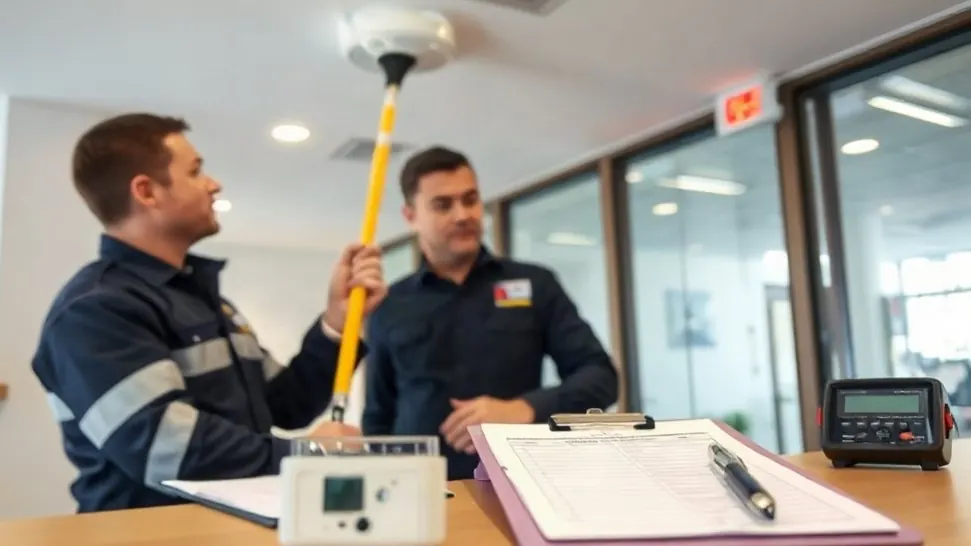
With any authorised adjustments complete, we’ll place the system into test mode where available, notify relevant occupants or monitoring providers, and test devices and control functions in a planned sequence. We’ll operate manual call points, sample automatic detectors and verify audible and visual warning devices can be heard or seen where required.
We’ll check the control equipment’s indications, power supplies, standby battery condition, sounder circuits and fault reporting. Smoke detector calibration is assessed against the device type, manufacturer guidance and site conditions; contamination, damage or poor positioning may affect response. We’ll also verify alarm system interoperability where fire doors, suppression equipment, access control, lifts or remote signalling interfaces are connected.
Any test that could interrupt normal operations is agreed beforehand. We’ll record defects, isolation requirements and urgent risk controls so you can prioritise remedial action safely.
Certificate
After testing, we’ll issue a clear service record or certificate stating the system tested, devices sampled, results, defects found and any remedial actions required. We’ll record the date, premises details, alarm panel status, zones tested, call points, detectors, sounders and any interfaces examined. You’ll receive clear pass, observation or failure outcomes, with priorities where defects could compromise fire safety.
The document supports your maintenance schedule and provides evidence for legal compliance, inspections and insurer enquiries. It doesn’t replace repairs: if we identify faults, we’ll explain the risk, recommend corrective work and provide a fixed written price before starting. Keep certificates with your fire-risk documentation, as they establish a testing history and help you plan certification renewal. We’ll also note the next recommended test date, so you can maintain reliable protection.
Options and what we recommend
We’ll recommend the testing approach only after reviewing the premises, fire alarm category, occupancy risks and any existing logbook or certification. We’ll assess detector coverage, call points, sounder audibility, control equipment condition, battery maintenance and zoning options, then propose proportionate visits that minimise disruption.
| Premises picture | Recommended focus |
|---|---|
| Small shop | Manual call points, sounders |
| Shared office | Detection coverage, escape routes |
| HMO corridors | Common-area alarms, audibility |
| Warehouse | Zoned testing, high-level devices |
For a compact Canterbury business, we’ll usually favour planned periodic testing with rotation of devices, so every zone is checked without repeatedly disturbing the same staff. Larger or higher-risk premises may need staged attendance, specialist access equipment or out-of-hours work. We’ll identify faults, degraded batteries, contamination and inaccessible devices, and explain remedial priorities clearly.
Rules and certificates
Fire alarm testing should be recorded in a site logbook, noting the date, device or zone tested, results, any faults found and corrective action taken; retaining service records, commissioning documentation and fault reports is advisable so you can demonstrate ongoing management of the system.
Whether electrical work requires formal certification or Building Control notification depends on the specific work. Some work — for example a new circuit, replacement of a consumer unit, or work in a bathroom or other special location — is notifiable under Part P when it meets the statutory definition of “notifiable work”; if you are unsure, check with Building Control or a competent person. NICEIC-approved competent persons are able to self-certify qualifying Part P work and notify Building Control on behalf of the client; if the person carrying out the work cannot self-certify, you will usually need a Building Control inspection.
We issue an Electrical Installation Certificate for new circuits and a Minor Electrical Installation Works Certificate for certain additions to existing circuits. An EICR is an inspection and testing report on the condition of an existing installation, not an installation certificate—if remedial work is required, additional certification may be needed for the new work. We monitor regulatory updates and competency requirements and aim to keep our advice current.
Older homes around Canterbury
We assess whether alarm coverage, detector positioning and audible warning are suitable for the typical layouts found in these properties — narrow, deep plan terraces with back-to-back rooms and original timber staircases — and for the common escape routes through front and rear doors or lightwells.
How long it takes and whether you lose power
Most routine fire-alarm tests in Canterbury take 30–90 minutes, depending on the number of detector heads, call points, sounders and any control equipment. We’ll confirm the scope beforehand, place the system in test mode where applicable, activate devices in a controlled sequence and verify audible, visual and control-panel indications.
A power outage isn’t normally required. Most tests use the existing mains supply and confirm battery standby operation without interrupting wider building services. However, isolating circuits may be necessary where faults, unsafe accessories or remedial work are identified. We’ll explain any proposed isolation before proceeding.
For occupied premises, downtime planning matters: notify staff, residents, alarm-receiving centres and relevant duty holders, manage temporary fire precautions, and avoid testing during critical operations. We’ll record results, defects and actions needed to maintain system integrity.