What this job involves and what it costs
Electric shower installation: from a straightforward replacement to a new dedicated circuit, costs depend on shower kW, cable run and consumer unit condition. Serving Canterbury and surrounding areas including nearby towns and villages. Work is certified with Part P notification where required and comes with a guarantee and issued electrical certification.
When you need it
- Your lights flicker or dim when the shower is on.
-
Usually means the shower is drawing too much power for the circuit or there’s a wiring/connection problem.
-
The consumer unit trips when you switch the shower on.
-
Usually indicates a short, earth fault or overload that’s cutting power to protect the circuit.
-
The shower cuts out mid-shower or won’t stay on.
-
Usually caused by overheating, a faulty thermostat or a failing internal safety switch.
-
The water temperature suddenly swings from hot to cold.
-
Usually caused by poor water flow, a blocked inlet filter, or a failing heating element/temperature control.
-
The shower is always too hot or too cold no matter how you set it.
-
Usually points to a broken temperature control, worn components, or the unit being beyond economical repair.
-
You can smell burning or scorching when the shower runs.
-
Usually means electrical overheating or component failure—turn it off and isolate the supply.
-
The shower casing is discoloured, melted or shows burn marks.
-
Usually a sign of past overheating or electrical damage that needs immediate attention.
-
The shower is leaking water from the unit or surrounding seals.
-
Usually caused by failed seals, thanington fittings or internal corrosion that can damage electrical parts.
-
The shower doesn’t provide enough flow or pressure.
-
Usually due to a blocked inlet, low household water pressure, or the wrong type of shower for your system.
-
You want anti-scald protection, pressure balancing, a timer or restricted flow to save energy/water.
-
Usually means a replacement model with those safety or efficiency features would be more suitable than repairing the old unit.
-
You have very old wiring in the house (rubber-insulated, VIR or aluminium) and are unsure if it’s safe.
-
Usually those cables need inspection or replacement before a new shower can be connected safely.
-
The shower is hot to touch on the outside or sounds like it’s working hard.
- Usually indicates internal overheating or failing components—stop using it until checked.
What it costs in Canterbury
Electric shower work in Canterbury is quoted per job after a free survey because the final cost depends on the shower’s kW rating, existing circuit capacity, cable route, consumer unit protection and any remedial electrical work required. We provide a fixed written price before work starts, including VAT, parts, labour, testing and certification.
| Job | Price | What's included |
|---|---|---|
| Electric shower installation | Quoted per job | Parts, labour, testing, certificate, VAT |
| Consumer unit replacement | £500–£700 | Protection upgrades where required |
Not included: plaster repairs, decoration, asbestos removal, DNO supply-upgrade charges, or scaffold access equipment.
What is involved on the day
On the day, we survey the proposed shower position, confirm the circuit arrangement and safely isolate the supply before work begins. We install the shower and associated wiring to the required standards, then complete electrical and functional tests. Once the installation passes, we’ll issue the appropriate certificate for your records.
Survey and isolation
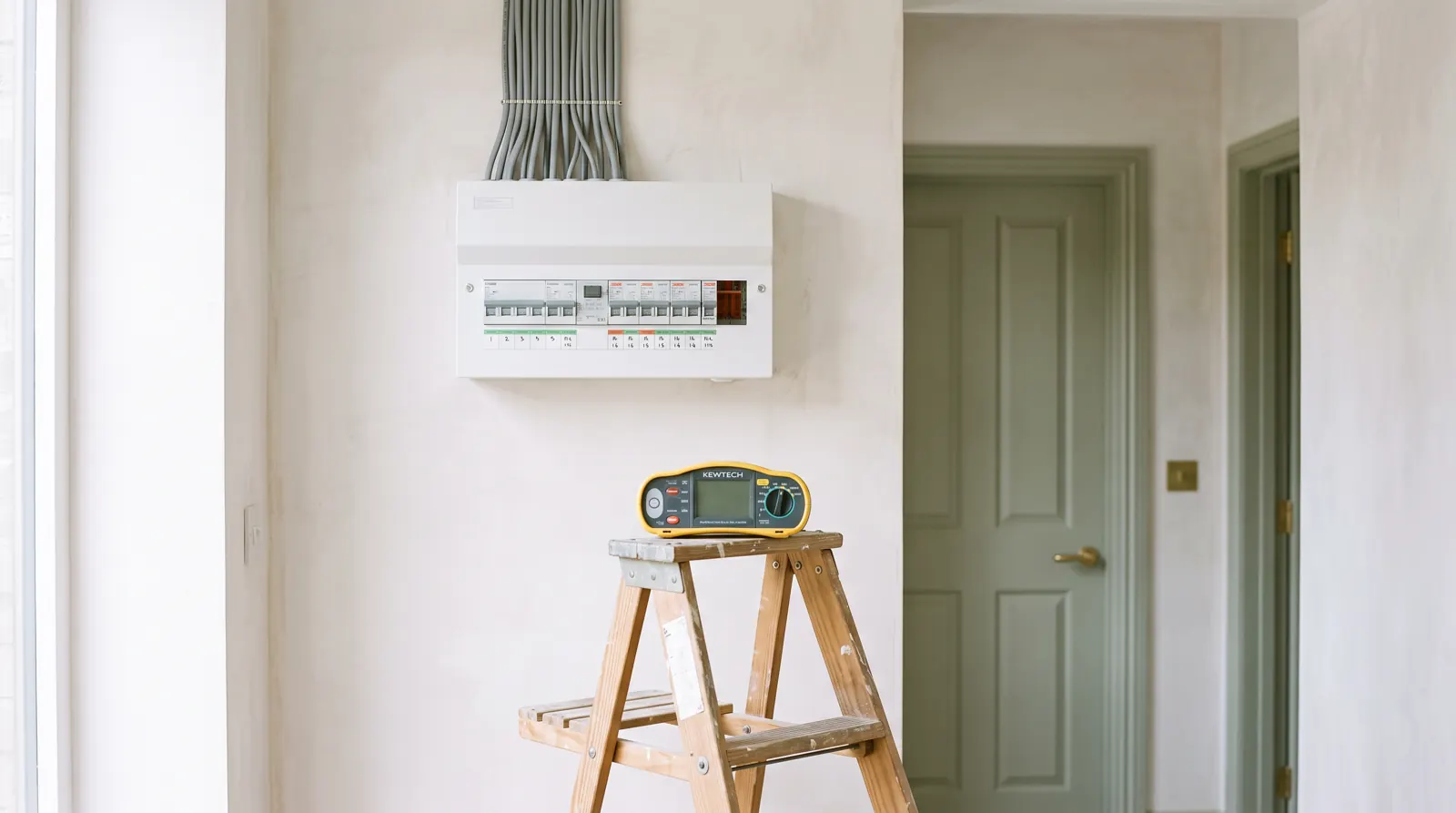
Before fitting an electric shower, we’ll survey the bathroom, confirm the proposed shower rating and check that the existing consumer unit, circuit capacity, earthing and bonding are suitable. Our safety assessment also considers the shower location, cable route, protective devices and whether the supply can safely support the required load. We’ll check water pressure and confirm that the incoming cold-water supply is appropriate for the selected unit.
Before any electrical work begins, we’ll follow a controlled isolation procedure. We identify the relevant circuit, verify circuit labelling, isolate the supply and prove dead using approved test equipment. We’ll then secure the isolation to prevent accidental re-energisation while work is underway. If we find unsuitable wiring, inadequate protection or defects affecting safety, we’ll explain the issue and agree the necessary remedial work before proceeding.
Installation
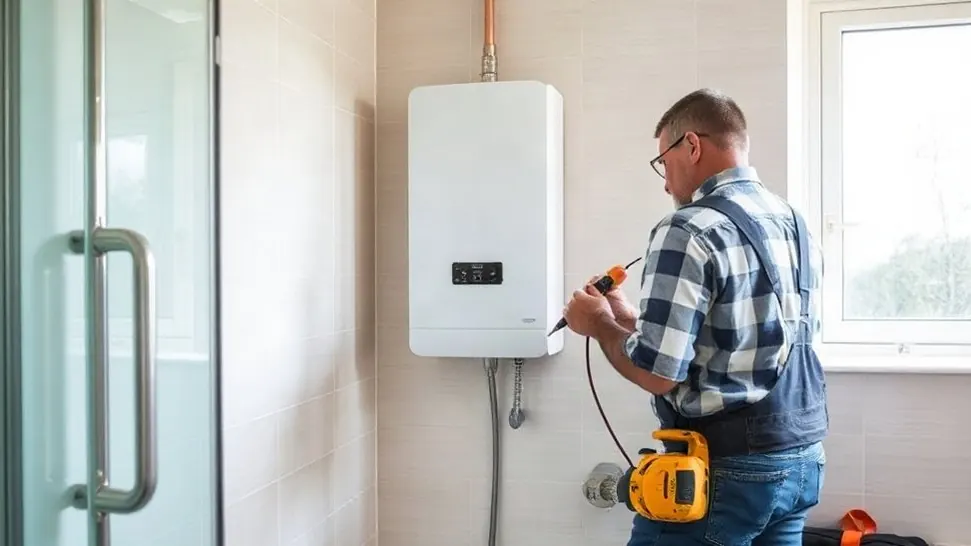
Once the supply has been safely isolated and the installation confirmed as suitable, we’ll install the dedicated shower circuit, correctly rated cable, protective device and local isolation switch in line with the manufacturer’s instructions and current wiring requirements.
We’ll mount the shower unit securely on a sound wall, allowing the specified clearances and access for future maintenance. Water connections are made using appropriate pipework and isolating valves, with pipe routing planned to avoid concealed electrical cables and minimise disruption to finishes. We’ll fit the riser rail, handset and hose, ensuring secure fixings and sensible positioning for daily use. Where practical, we’ll discuss shower aesthetics, including cable containment, unit position and neat surface finishes. Any penetrations through tiled walls are sealed carefully to reduce moisture ingress, while preserving the bathroom’s existing layout.
Testing
We’ll test the completed shower circuit before it’s put into service, confirming continuity, insulation resistance, polarity, earthing arrangements and automatic disconnection performance. We’ll verify the circuit’s protective device rating, cable suitability and RCD operating times, ensuring the installation disconnects promptly under fault conditions. Electrical testing also includes checking the shower’s supply terminals, isolator switch and all accessible connections for secure termination and correct identification.
We’ll then carry out functional checks with the water supply available, confirming safe operation, controls and flow without signs of overheating or nuisance tripping. Compliance testing confirms that the new circuit and associated protective measures meet applicable safety requirements. If tests identify an issue, we’ll rectify it before the shower is used. This final process helps protect you from electric shock, fire risk and avoidable equipment damage.
Certificate
After the electric shower circuit has passed testing, we’ll issue the appropriate electrical certificate for the work completed. This records the new or altered circuit, protective devices, test results and confirmation that the installation complies with BS 7671 at the time of completion.
We’ll explain what the certificate covers and advise you to retain it with your property records. Where Building Regulations notification applies, we’ll submit the required details through the relevant competent-person scheme so you receive confirmation separately.
Your certificate should be kept available for future electrical work, an EICR, insurance queries or a house sale. We can provide certificate copies if originals are misplaced, subject to record availability. We’ll also give clear warranty details, including our 12-month workmanship guarantee, and identify the shower manufacturer’s separate product warranty requirements.
Options and what we recommend
Although electric showers are available in several power ratings, we’ll recommend the highest unit your existing supply can safely support rather than simply fitting the largest model. We assess the dedicated circuit, protective device, cable route and water pressure first.
| Option | Best suited to | Our recommendation |
|---|---|---|
| 8.5kW | Smaller households | Good where supply capacity is limited |
| 9.5kW | Most Canterbury homes | Usually the best flow-versus-demand balance |
| 10.5kW | Stronger supplies | Only where circuit capacity permits |
A 9.5kW shower is often the practical choice, delivering better winter flow without excessive loading. Choose Thermostatic control where possible: it helps stabilise discharge temperature when cold-water pressure changes. For Energy efficiency, select a unit with clear temperature settings and use an appropriate low-flow shower head. We’ll also consider accessibility, controls and existing bathroom layout before specifying the model.
Rules and certificates
Because installing an electric shower can involve a new dedicated circuit or changes in a bathroom, the work may be notifiable under Part P of the Building Regulations in some circumstances; whether notification is required depends on the exact nature of the work. Before installation we assess the design, circuit capacity, protective devices, earthing and bonding so the shower can be supplied safely and to the standards of the Building Regulations and BS 7671.
If we install a new circuit we normally issue an Electrical Installation Certificate (EIC); for certain limited additions to an existing circuit a Minor Electrical Installation Works Certificate may be appropriate. As an NICEIC-registered competent person we can self-certify eligible notifiable work and, where applicable, notify Local Authority Building Control — but not all electrical work is notifiable, and eligibility for self-certification depends on the specific work undertaken. You will receive any relevant certificate and confirmation of Building Regulations compliance where applicable; these documents should be kept with your household records.
Older homes around Canterbury
In those Wincheap and town-centre Victorian terraces (many built 1840–1900) we still encounter VIR (vulcanised India rubber) or rubber-insulated cable in original or partially-updated installations, so we will inspect the consumer unit, main earthing and local bonding, the visible cable condition in these properties, and the available load capacity in the local installation before recommending a shower rating suitable for that Canterbury house. In many of Canterbury’s Victorian terraces the existing wiring is often unsuitable for a new high-load radial or shower-dedicated circuit and should not be extended without testing and any remedial work required.
If the installation in a particular Canterbury property needs upgrading, we will provide a fixed written quotation for the electrical work and supply the appropriate certification tailored to that Canterbury address.
How long it takes and whether you lose power
For a straightforward electric shower replacement on an existing suitable circuit, we can usually complete the work in a single visit, typically within two to four hours. We’ll isolate the shower circuit at the consumer unit, prove it dead, fit and connect the new unit, then test protective devices, polarity, earth continuity and operation before restoring supply.
A brief Power interruption is normally limited to the shower circuit, although we may need to isolate the whole property temporarily where consumer-unit access or testing requires it. We’ll explain this beforehand and minimise disruption.
Timeframe expectations change where cable routes, circuit capacity, bonding, water damage or older wiring need investigation. Installing a new dedicated circuit, upgrading protection or carrying out remedial work can extend the visit or require a return appointment. We won’t energise anything until testing confirms compliance.