What this job involves and what it costs
Hot tub electrical installations with dedicated supply, protection and waterproofing — typical consumer-unit replacements cost about £500–£700 including VAT, labour and certification (final price after survey). Serving Canterbury and surrounding areas. Work is fully certified to BS 7671 with RCD/isolation fitting and comes with a fixed written quotation and workmanship guarantee.
When you need it
- I have to turn on a new hot tub but there’s no dedicated power supply available.
-
Usually means the tub needs its own professionally installed circuit before it’s safe to use.
-
The power trips every time I try to run the hot tub.
-
Usually means there’s a fault or the protection device is reacting to a current leak or overload and needs checking.
-
I can see water or damp around the electrical parts, or the outdoor wiring looks wet.
-
Usually means moisture has got into the equipment and it may be unsafe until inspected and repaired.
-
There’s no obvious switch or it’s hard to reach the isolation switch for the tub.
-
Usually means the isolator might be wrongly positioned or missing, and it should be accessible but not in a banned zone.
-
The cables, gland seals or the box look cracked, torn or rusty.
-
Usually means the weatherproofing is compromised and parts need replacement to keep things safe outdoors.
-
After garden work or moving the tub, something doesn’t power up or trips intermittently.
-
Usually means the wiring may have been disturbed or damaged and needs an assessment.
-
The tub has been left unused for a while and now won’t run properly.
-
Usually means the system needs recommissioning and a safety check before reuse.
-
I had flooding or the tub was submerged and now electrical parts behave oddly.
-
Usually means water exposure could have damaged components and full inspection is required before using.
-
The safety switch keeps tripping and I keep resetting it to get the tub running.
-
Usually means there’s a persistent fault—don’t reset repeatedly; it needs a professional diagnosis.
-
Someone suggested plugging the tub into an extension lead because the built-in supply won’t reach.
-
Usually means that’s unsafe—large appliances need a proper dedicated supply, not an extension lead.
-
My electrics don’t look like they have a modern safety device (RCD) nearby.
-
Usually means there may be insufficient earth-fault protection and an upgrade may be needed.
-
I’m planning to install a tub, so I want someone to check before I buy or site it.
- Usually means an assessment will confirm the right circuit, protection and positioning for safe outdoor use.
What it costs in Canterbury
Hot-tub electrical work in Canterbury is quoted per job after a free survey because the final cost depends on the tub’s load, cable route, earthing arrangements and whether a new dedicated circuit or supply upgrade is needed. We’ll provide a fixed written price before work starts.
| Job | Price | What's included |
|---|---|---|
| Hot tub circuit | Quoted per job | Parts, labour, testing, certificate, VAT |
| Consumer unit replacement | £500–£700 | Parts, labour, testing, certificate, VAT |
| Fault finding | £80/hour | Investigation; most faults take 1–2 hours |
| Emergency attendance | £120/hour | First hour minimum |
| Supply upgrade | Quoted per job | Assessment and compliant design |
Costs exclude DNO charges, asbestos removal, scaffolding, plaster repair and decoration.
What is involved on the day
On the day, we’ll confirm the agreed route and load requirements, then safely isolate the relevant supply before work starts. We’ll install the dedicated circuit and protective devices in line with BS 7671, keeping all connections suitable for the hot tub environment. Once testing is complete, we’ll issue the appropriate electrical certificate for your records.
Survey and isolation
Before any hot tub electrical work begins, we’ll survey the proposed location, cable route, consumer unit capacity and earthing arrangement, then confirm the manufacturer’s supply requirements. Our site survey checks access, external zones, existing circuits, bonding and whether the supply can safely accommodate the additional load.
We’ll identify the correct point of isolation and explain what will be temporarily switched off. Before touching any existing wiring, we follow a safe isolation procedure: disconnecting the relevant circuit, securing it against reconnection, proving our tester, testing for dead, then reproving the tester. This protects everyone on site and prevents assumptions about live conductors.
Where older Canterbury properties have aluminium, VIR or rubber-insulated wiring, we’ll assess its condition carefully. We’ll also note any listed-building constraints before agreeing the work.
Installation
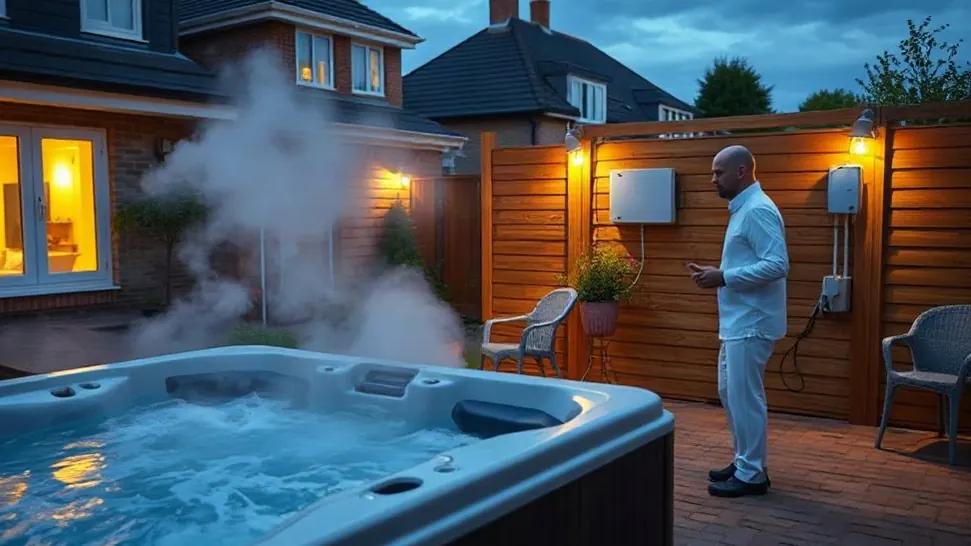
Once the installation plan is agreed, we’ll run the correctly sized supply cable, fit the required protective devices at the consumer unit and install a suitable local isolator within reach of the hot tub but outside its electrical zones. We’ll use appropriate containment or armoured cable where external routes need mechanical protection, keeping cables clear of heat, damage and water ingress risks.
We’ll make connections in suitable weatherproof enclosures and follow manufacturer instructions alongside BS 7671 requirements. The circuit will have appropriate RCD protection to reduce the risk from a ground fault, with cable sizing based on load, route and installation method. We’ll also assess bonding requirements, including any extraneous-conductive-parts near the installation. Where routing crosses patios, lawns or walls, we’ll reinstate surfaces neatly and keep disruption to a minimum.
Testing
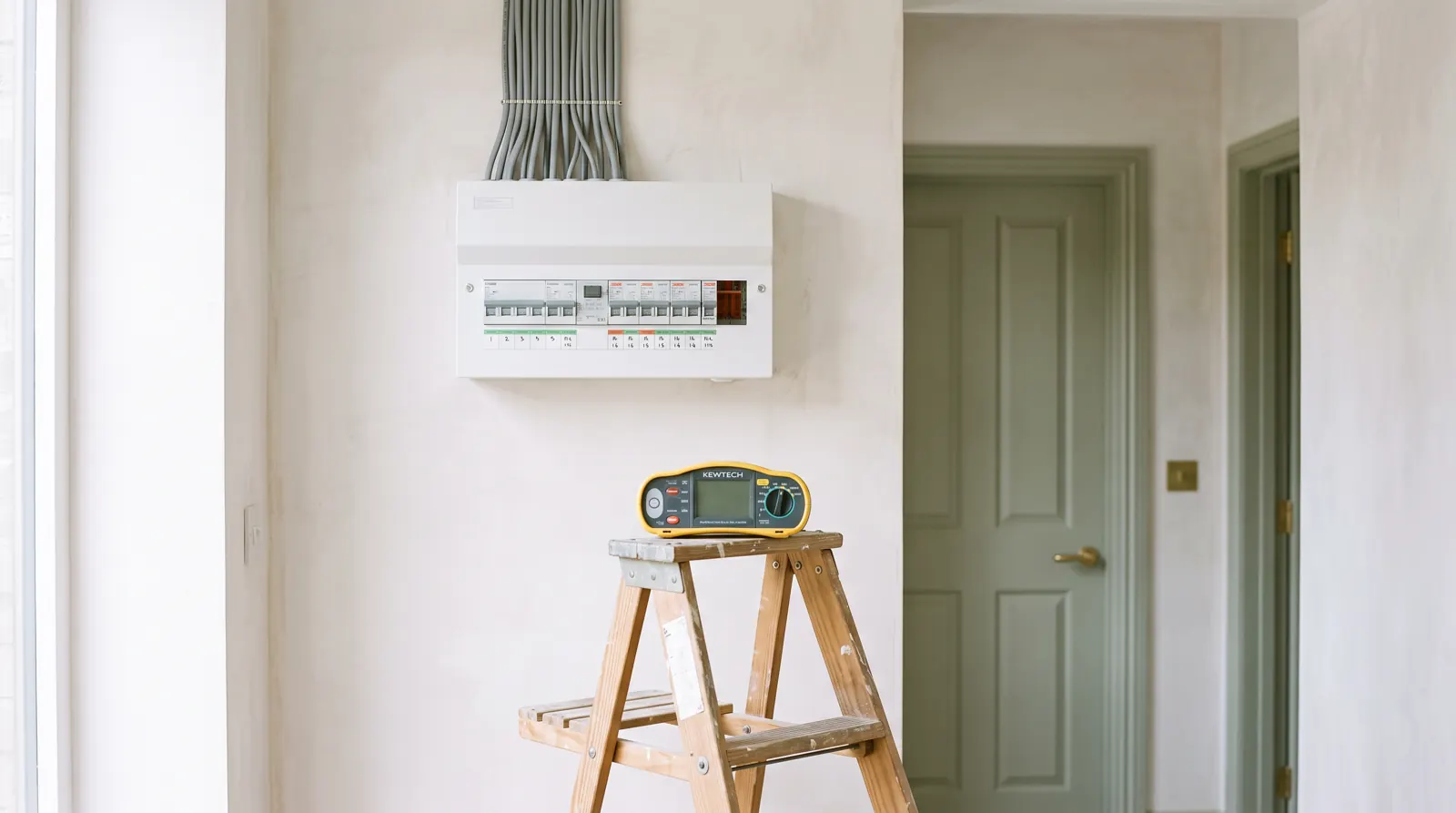
After the hot tub circuit is connected, we’ll carry out dead and live testing to confirm the installation is safe and compliant with BS 7671. Dead tests check continuity of protective conductors, insulation resistance and polarity before energisation. We’ll also verify that bonding arrangements, cable routes, isolator location and consumer unit protection are suitable for the installation.
Once safe to energise, our live testing procedures include confirming earth fault loop impedance, prospective fault current and RCD disconnection performance. We’ll make certain the RCD operates within the required times and that the circuit disconnects correctly under fault conditions. We’ll check the hot tub isolator is accessible and appropriately positioned outside relevant electrical zones. If readings identify an issue, we’ll explain what’s needed before the circuit is used. Ongoing periodic inspection helps maintain safety as equipment, outdoor cabling and protective devices age.
Certificate
Provided the test results are satisfactory, we’ll issue the appropriate electrical certificate for the new hot tub circuit on the day, usually an Electrical Installation Certificate where a new dedicated circuit has been installed. This safety certificate records the circuit design, protective devices, test readings, earthing arrangements and confirmation that the work complies with BS 7671.
We’ll also complete any required Building Regulations notification under Part P, where applicable, so the installation paperwork is properly recorded. You should keep the certificate with your property documents, consumer unit information and hot tub manual. It provides evidence that the supply has been installed and verified correctly, and may be useful for insurers, future alterations or a house sale. If testing identifies a defect, we won’t certify the circuit until it has been rectified and retested.
Options and what we recommend
For most Canterbury hot tub installations, we recommend a dedicated circuit from the consumer unit, protected by an appropriately rated RCBO and installed to the manufacturer’s supply requirements. This gives the supply capacity and Ground fault protection a high-load spa needs, without overloading existing circuits.
| Option | What it means for you |
|---|---|
| Dedicated buried cable | Reassurance: sturdy, protected power to the tub |
| Weatherproof isolator | Confidence: safe local isolation when needed |
We’ll assess cable route, load, earthing arrangement and bonding requirements before selecting equipment. Weatherproof enclosure selection matters: fittings must suit their location, exposure and likely splash zones. A correctly sized supply, suitable protective device and accessible isolation point reduce avoidable risk. Where the consumer unit lacks suitable spare capacity, we’ll explain practical upgrade options and provide a fixed written price before work begins.
Rules and certificates
A hot tub installation that requires a new dedicated circuit is likely to be notifiable under Part P of the Building Regulations in England; where notification is required, the electrical work must meet applicable safety and compliance standards, including suitable circuit protection, isolation and testing before the supply is energised.
As an NICEIC-approved, Part P-registered contractor we can self-certify certain eligible electrical work and, where appropriate, notify Building Control on your behalf; this may avoid you having to arrange a separate inspection in those specific cases.
If we install a new circuit or replace a consumer unit we can issue an Electrical Installation Certificate (EIC) where the work falls within the scope of that certificate; adding to a suitable existing circuit may be covered by a Minor Electrical Installation Works Certificate instead. Please keep any certificates with your property records — they are evidence the installation was tested, and were certified and notified where that was required.
Older homes around Canterbury
Where we find these issues during testing in those areas, we will explain the specific remedial work required to deliver a safe, compliant installation for that property.
At those addresses we plan cable routes to minimise disturbance to historic fabric and will advise owners whether listed building consent may be required for any external works or alterations. In every case across Canterbury we design to meet BS 7671 requirements for the property in question, including suitable RCD protection, isolation and appropriate equipment selection.
How long it takes and whether you lose power
Most Canterbury hot tub installations are completed within a day, provided the consumer unit has suitable capacity and the cable route is straightforward. We’ll assess loading, protective devices, earthing and the proposed outdoor route before confirming the Installation duration. A dedicated circuit, suitable RCD protection and correct isolation arrangements must be installed and tested in accordance with BS 7671.
You should expect a short, planned Power outage while we safely isolate the consumer unit, install the new protective device and complete final connections. This is usually limited to the work directly affecting the board, rather than an all-day interruption. Longer work may be needed where capacity upgrades, difficult cable routes, concealed wiring, or remedial work are required. We’ll explain the sequence beforehand, keep supplies isolated only when necessary, and issue the appropriate electrical certification after testing.