What this job involves and what it costs
Extractor fan installation replaces or upgrades bathroom/kitchen ventilation; costs are fixed in a written quote covering parts, labour and any certification. Serving Canterbury and surrounding areas including Harbledown, Rough Common and Wincheap. Work is fully guaranteed and issued with required electrical certification on completion.
In Canterbury and Harbledown, Rough Common and Wincheap we work across Georgian brick houses near the cathedral precincts, Victorian terraces in Wincheap and St Dunstan's, large student rental stock, new estates at the edges. The recurring themes are student and rental HMO compliance, listed and period property in the precincts, commercial work for the city centre; we explain what we find in plain English and put a fixed price in writing before any work begins.
When you need it
- Steam hangs in the room long after you’ve finished showering or cooking.
-
Usually means the extractor isn’t removing enough moisture and needs repair or replacement.
-
Paint peels, you see damp patches, or mould keeps coming back on walls or ceilings.
-
Usually means poor ventilation is letting condensation build up and needs a better extractor or ducting fix.
-
The fan makes rattling, grinding or buzzing noises.
-
Usually means the motor or mounting is failing and the unit needs attention or replacement.
-
The fan cuts out, runs intermittently, or seems slow to start.
-
Usually means there’s an electrical fault, worn motor, or damaged wiring that needs checking.
-
Air doesn’t seem to be drawn away — the room still feels stuffy even with the fan on.
-
Usually means blocked ducting, a clogged external grille or poor airflow path that needs clearing or rerouting.
-
There’s no fan at all in an internal bathroom, shower room or kitchen.
-
Usually means you need a compliant extractor installed to prevent moisture problems.
-
The fan runs all the time even when you don’t need it.
-
Usually means the control or sensor is faulty or missing — a humidity sensor or timer could fix it.
-
The external grille is blocked by debris, bird nest or paint buildup.
- Usually means the socket is obstructed and needs cleaning or repair to restore proper ventilation.
What it costs in Canterbury
Extractor fan installation in Canterbury is quoted per job after a free survey, with a fixed written price provided before work starts so you can budget confidently. We protect bathroom aesthetics and ensure compliant vent placement while including parts, labour and certification as listed below.
| Job | Price | What's included |
|---|---|---|
| Extractor fan installation | Quoted per job | Parts, labour, testing, certificate, VAT |
| Electrical fault finding | £80/hr | Diagnosis; most faults traced in 1–2 hours |
| Out-of-hours emergency | £120/hr | First hour minimum, urgent electrical support |
Prices exclude plaster repairs, decoration, asbestos removal, DNO supply-upgrade charges, and scaffold or specialist access equipment.
What is involved on the day
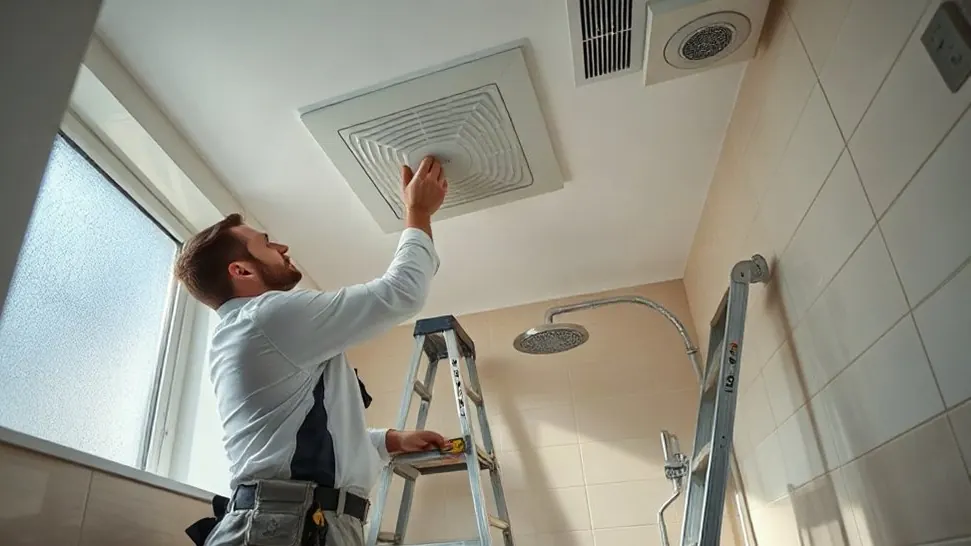
On the day, we’ll survey the proposed fan position and safely isolate the relevant circuit before work begins. We’ll install the fan, ducting and external grille as specified, then test its operation and electrical safety. Once complete, we’ll provide the appropriate certificate where required.
Survey and isolation
Before fitting an extractor fan, we’ll survey the room, confirm the most suitable position for ventilation and check the proposed cable route, external grille location and any building constraints. We’ll consider moisture zones, existing wiring, access to the outside wall or roof space, and whether the property’s construction requires particular care.
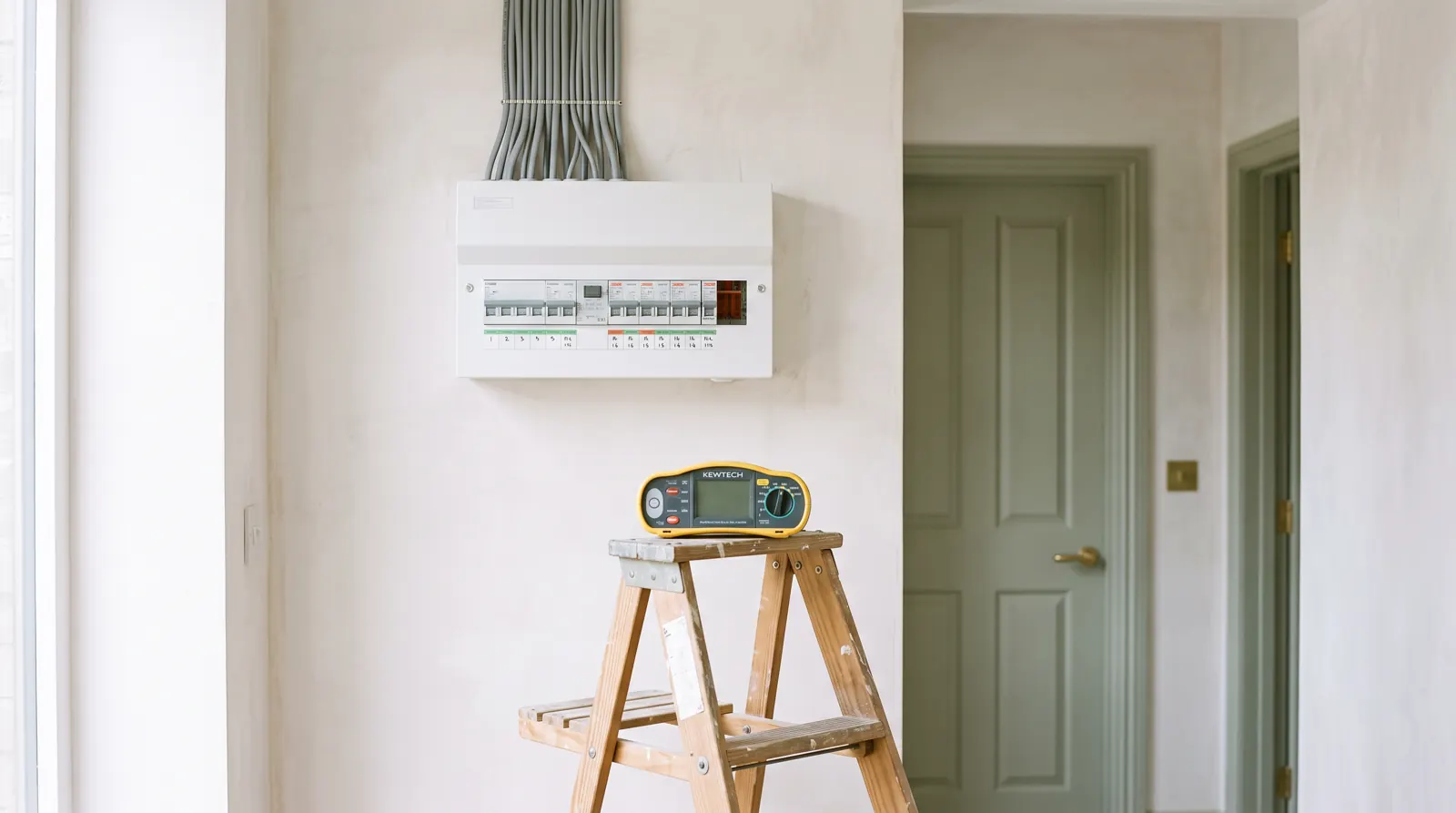
We’ll then complete our safety checklist and explain any findings that affect the agreed scope or price. Before electrical work begins, we’ll follow a safe isolation procedure: identify the correct circuit at the consumer unit, isolate it, secure it against reconnection and prove it is dead with appropriate test equipment. We won’t rely solely on a switched-off fan or labelled circuit. This protects you, your household and our electricians while ensuring the work starts in accordance with electrical safety requirements.
Installation
Once the circuit has been safely isolated, we’ll fit the fan in the agreed position, form the duct route to the outside where required, and install a suitable external grille or roof terminal. We’ll use appropriate fixings, support ducting securely and minimise bends to protect ventilation efficiency. Where a wall or ceiling penetration is needed, we’ll work carefully to avoid concealed services and make good the area as agreed.
We’ll select and position ducting to reduce resistance, condensation risks and unnecessary airflow losses. For noise reduction, we’ll use suitable mounting methods and avoid thanington duct runs that could vibrate in use. All electrical connections will be contained correctly and completed in accordance with current requirements. We’ll also guarantee the installation is neat, accessible where practical, and appropriate for the room’s moisture conditions.
Testing
After installation, we’ll test the extractor fan’s operation, airflow and controls, including any timer, humidistat or isolation switch. Our testing procedure confirms the fan starts correctly, runs safely and responds as intended to lighting, pull-cord or sensor controls. We’ll check that air is being discharged effectively through the duct route and external grille, with no obvious obstruction, excessive noise or vibration.
We also inspect connections, cable protection and isolation arrangements, ensuring the work is safe and suitable for the bathroom, kitchen or utility room environment. Where applicable, we’ll adjust timer overrun or humidistat settings to suit your requirements while maintaining effective ventilation. Performance benchmarking allows us to compare the installed fan’s operation against its expected capability, helping identify poor duct performance or airflow restrictions before we leave.
Certificate
Provided the installation is notifiable work, we’ll issue the appropriate electrical certification on the day or promptly after completion, recording the circuits, tests and protective measures involved. This confirms the extractor fan installation has been inspected and tested in line with the applicable requirements.
Where required, we’ll provide an installation certificate and notify the work through the relevant competent person scheme, helping demonstrate compliance with building regs. You should keep the paperwork with your property records, particularly if you later sell, let or alter the home.
For minor additions or alterations, the correct certificate may instead be a Minor Electrical Installation Works Certificate. We’ll explain which document applies before we leave. Our records identify the fan circuit, isolation method, earthing arrangements and test results, giving you clear evidence that the work has been completed safely.
Options and what we recommend
For most Canterbury bathrooms, kitchens and utility rooms, we recommend a correctly sized, quiet extractor fan with an external discharge route and suitable overrun or humidity control. Ducted extraction removes moist air effectively, while Silent operation makes everyday use less intrusive.
| Option | Our recommendation |
|---|---|
| Bathroom fan | Humidity sensor or timed overrun |
| Kitchen fan | Higher extraction rate, external duct |
| Utility room | Humidity control where drying occurs |
| Through-wall route | Short, straight ducting where practical |
We’ll assess room use, duct length, access and the existing electrical supply before advising. For Victorian terraces or period homes, we take particular care over concealed services and suitable discharge positions. We avoid recirculating-only solutions where moisture removal is needed, because they don’t discharge humid air outside. We’ll explain the chosen controls clearly, so you can use the fan safely and efficiently.
Rules and certificates
Extractor fan installation can sometimes engage Building Regulations, particularly when a new circuit is needed or when work is carried out in a bathroom or other special location; whether Part P notification is required depends on the specific work and should be assessed before starting. As an NICEIC-approved, Part P-registered contractor we can self-certify eligible notifiable electrical work and, where applicable, submit the required notification to Building Control on your behalf; this does not remove statutory duties but can avoid you having to arrange a separate inspection.
If a new circuit is installed we would issue an Electrical Installation Certificate; when work involves alterations to an existing circuit the appropriate document is typically a Minor Electrical Installation Works Certificate. These certificates record that prescribed tests have been carried out and provide evidence for your property records. If work is carried out by someone who is not a registered competent person you may need to arrange and pay for a Building Control inspection.
Older homes around Canterbury
In Canterbury and its surrounding neighbourhoods we take particular care before connecting an extractor fan in older properties. We don’t assume a bathroom supply in Canterbury is suitable simply because a light or a previous fan is already installed in those properties.
Properties with sash windows typical of the central town conservation areas may need an alternative ventilation position that avoids unnecessary alteration while still providing effective extraction. For listed or sensitive period properties in the Canterbury town centre Conservation Area and around Howland Wood, we’ll explain the practical options before work begins, helping you balance ventilation, appearance and electrical safety for each specific Canterbury address.
How long it takes and whether you lose power
Most straightforward extractor fan replacements in Canterbury take around one to three hours, while a new installation with ducting, an external grille or a timed isolator may take half a day. We’ll assess access, cable routes and the existing circuit before confirming the schedule, particularly in older properties.
You may lose power briefly while we safely isolate, test and connect the fan circuit. Usually, this affects only the relevant lighting circuit, but we’ll explain any wider interruption before work begins. We test protective measures, operation and overrun settings before restoring supplies. Where suitable, we can discuss Noise reduction through fan selection, anti-vibration fittings and sensible duct routing. Ventilation zoning can also help separate bathrooms, kitchens or utility areas, improving control without compromising electrical safety or compliance.