What this job involves and what it costs
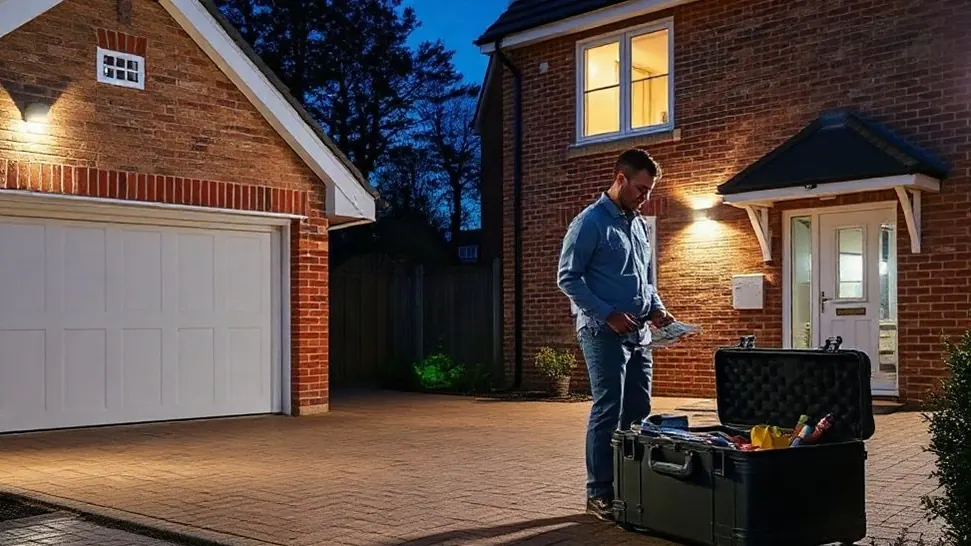
Security lighting installation evaluates entry points, selects LED fittings and sensors, wires, tests and certifies the circuit — fixed written prices cover parts, labour and certification so your bill won’t exceed the quote. Serving Canterbury and surrounding areas including nearby villages and suburbs. Work is backed by our guarantee and carried out by NICEIC-approved, Part P-registered electricians for safe, compliant, durable installations.
When you need it
- You feel uneasy walking up to your front door because it’s really dark at night.
-
This usually means there isn’t enough lighting where people approach your home.
-
You jump when someone or something moves near your fence or gate.
-
That often means there are blind spots the current lights or sensors aren’t covering.
-
You miss a step or nearly trip on a path because you can’t see it properly.
-
That usually means the pathway lighting is too dim or poorly aimed.
-
Your motion light goes off and on constantly when cars pass by.
-
That typically means the sensor is too sensitive or pointed at the road.
-
Your lights never come on when you expect them to.
-
That usually means the sensor or switching is unreliable or misconfigured.
-
The light glare from your property annoys the neighbours.
-
That often means fittings are poorly positioned or lack proper shields.
-
Your lights trigger at dusk and stay on all night even when no one’s there.
-
That usually means the sensor type or settings aren’t suited to the area.
-
A light randomly turns on and off when other appliances are used in the house.
-
That typically points to an electrical issue or a sensor that’s affected by supply fluctuations.
-
You’re not sure where cables or switches are, or they look damaged.
- That usually means the installation or wiring needs checking and possible repair.
What it costs in Canterbury
For security lighting in Canterbury we provide a fixed written price after a free survey so the bill won’t exceed the quote; costs are quoted per job and consider safe cable routes, garden sensors and wireless timers. We’ll explain options that protect entrances and darker garden areas without charging for unnecessary features.
| Job | Price | What's included |
|---|---|---|
| Security-light installation | Quoted per job | Parts, labour, testing, certificate, VAT |
| Fault finding | £80/hr | Diagnosis; most faults traced in 1–2 hours |
| Emergency attendance | £120/hr | First hour minimum, urgent safety checks |
Not included: plaster repairs, decoration, asbestos removal, DNO supply-upgrade charges, scaffold/access equipment, or any wiring repairs (these will be identified and quoted separately).
What is involved on the day
On the day, we’ll survey the proposed lighting positions, confirm the cable route and safely isolate the relevant circuit before work starts. We’ll install the fittings and controls, keeping disruption and unnecessary costs to a minimum. We’ll then test the installation and provide the appropriate electrical certificate.
Survey and isolation
Before fitting security lighting, we’ll survey the property to identify vulnerable approaches, suitable mounting positions, cable routes and the best place for controls. We’ll discuss how you use entrances, paths, driveways and gardens, ensuring coverage is useful without causing glare for neighbours or road users. Our risk assessment considers working height, exterior surfaces, weather exposure and safe access to the proposed positions.
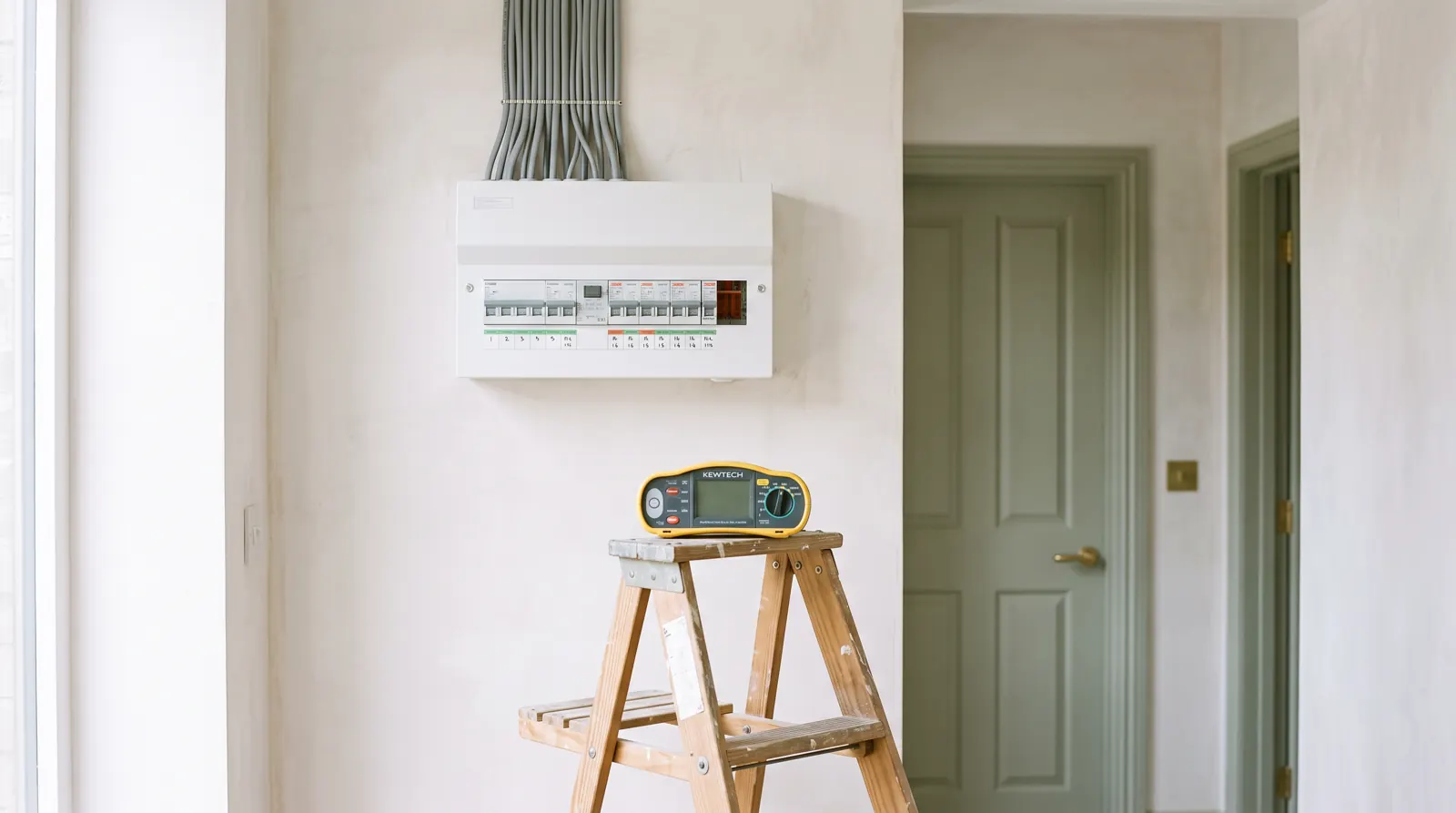
We’ll inspect the existing electrical supply and consumer unit, checking whether a suitable circuit is available. Cable tracing helps us avoid concealed wiring and identify practical routes that limit disruption and unnecessary remedial work. Before any electrical work begins, we’ll isolate the relevant supply, prove it is dead and secure it against accidental reconnection. This protects everyone on site and allows us to confirm the agreed scope before costs are committed.
Installation
Once the supply is safely isolated and the layout agreed, we’ll install the chosen security lights, weather-resistant cabling and controls at the planned positions. We’ll use suitable fixings for brickwork, render, timber or soffits, keeping cable routes neat, protected and as discreet as practical. Where possible, we’ll use existing routes to reduce disruption and avoid unnecessary chasing or making good costs.
We’ll fit security sensors where they have a clear view of approach routes, without placing them too close to heat sources, moving branches or neighbouring property. For motion detection units, we’ll position the head and sensor at an appropriate height and angle for the area you want covered. Any external connections will be enclosed in suitable weatherproof accessories, and we’ll seal penetrations to help prevent water ingress.
Testing
After fitting the security lighting, we’ll test each light, sensor and control to confirm it operates safely and as intended. We’ll carry out circuit verification at the consumer unit and lighting points, checking protective devices, earthing, polarity and connections before energising the system.
We’ll then walk through the practical settings with you: sensor detection range, dusk threshold, timer duration and manual override controls. Each fitting is tested in likely approach areas, so we can reduce blind spots and avoid unnecessary triggering from paths, traffic or neighbouring movement. Our testing protocols also include confirming that lights switch reliably and don’t affect other circuits. If adjustments are needed, we’ll make them while we’re there. This careful final stage helps forestall call-backs, avoids wasted energy from poorly set sensors, and ensure your new lighting provides dependable security from the first evening.
Certificate
With the lights tested and settings agreed, we’ll provide the appropriate electrical certification for the work completed on the day. This confirms the installation has been inspected, tested and recorded in line with the relevant electrical requirements. We’ll explain what the document covers and keep the process straightforward, so you know what has been fitted and where.
You’ll also receive installation records showing circuit details, protective devices and test results where applicable. Keep these with your property paperwork, particularly if you later alter the lighting, arrange an EICR or sell the home. We’ll include warranty documentation for the fittings and our 12-month workmanship guarantee. Certification is included in our written fixed price, so there are no unexpected charges after completion. If anything needs clarification, we’ll talk you through it before we leave.
Options and what we recommend
For most Canterbury homes, we recommend LED PIR security lighting: it’s economical to run, gives instant light when someone approaches and avoids unnecessary illumination through the night.
| Option | Best use |
|---|---|
| PIR floodlight | Driveways and rear gardens |
| Dusk-to-dawn LED | Paths needing steady light |
| Camera light | Entrances requiring visibility |
We’ll position motion detectors to cover approach routes, not neighbouring gardens or public footpaths. Adjustable dusk sensors stop daytime activation and help reduce wasted electricity. Choose a modest wattage LED for paths and doors; higher-output fittings suit larger driveways. For Victorian terraces or older estates, we’ll check the existing cable condition before adding outdoor equipment. Weatherproof fittings and sensible aiming reduce glare, improve visibility and make the installation safer. We’ll explain the options, set detection range and timing, then provide a fixed written price before work begins.
Rules and certificates
Security lighting must be installed and tested safely. Replacing or adding a light to an existing suitable circuit is normally non-notifiable under Part P, though you should check specifics for your installation; in such cases we still test the work and issue a Minor Electrical Installation Works Certificate where applicable.
Installing a new circuit, replacing a consumer unit, or carrying out electrical work in a bathroom or other special location can be notifiable under Part P. As NICEIC-approved, Part P-registered electricians, we can self-certify eligible work and notify Building Control on your behalf; if work is eligible for self-certification we will provide an Electrical Installation Certificate for new circuits or consumer units and make the required notification.
Most domestic security lights do not require planning permission, but this is not universally true — listed buildings, properties in conservation areas, and very prominent or large installations may need planning or listed-building consent, so checks should be made. We will also explain sensible maintenance: clean lenses, check sensors and test fittings periodically.
Older homes around Canterbury
In older terraces and semi-detached houses in Wincheap and central Canterbury we often need a little more investigation before we add security lighting. Connecting a new fitting to deteriorated wiring in these types of mid- to late‑Victorian and inter‑war homes can create a fault risk, so we’ll explain whether remedial work in those Canterbury properties is sensible before proceeding.
In those historic facades you may need listed building consent from Canterbury Borough Council for alterations, so it’s worth checking with Canterbury Borough Council before fixing lights to historic external walls. Where appropriate in town centre listed terraces or riverside cottages near the Lockmeads, surface-mounted conduit, discreet cable routes or a separate supply can sometimes protect the original fabric. We’ll provide a fixed written price for work in Wincheap and central Canterbury, including any essential electrical improvements to typical 19th- and early 20th-century houses, so you can balance security, appearance and budget safely.
How long it takes and whether you lose power
Most Canterbury security-light installations are completed in a single visit, with a straightforward replacement or new fitting usually taking a few hours. We’ll confirm realistic timeline expectations before booking, including any extra time needed for cable routes, high-level access or testing an existing circuit.
We normally isolate only the relevant circuit while we work, so full power outages are uncommon. If the consumer unit needs attention or the circuit cannot be safely separated, we’ll explain the brief interruption in advance. We can suggest practical workarounds, such as charging devices beforehand and avoiding use of affected outdoor areas until testing is complete. For shared access, flats or close boundaries, neighbour notification may be sensible where ladders, drilling or temporary access could affect others. We test the light, sensor and protection before restoring supply.